
Bangkok Historic District Walking Tour: The Definitive Self-Guided Rattanakosin Itinerary
The historic core of Bangkok, known as Rattanakosin Island (เกาะรัตนโกสินทร์ – Koh Rattanakosin), is not a natural island but a fortified sanctuary bounded by the Chao Phraya River and ancient defensive canals. Established in 1782 by King Rama I, this district holds the highest concentration of royal, religious, and culinary heritage in the capital.
- Why Explore Bangkok’s Historic District on Foot?
- Best Walking Route: The Rattanakosin Loop
- Suggested Half-Day & Full-Day Itinerary
- Major Attractions Along the Route
- Wat Pho (Temple of the Reclining Buddha)
- The Grand Palace & Wat Phra Kaew (Temple of the Emerald Buddha)
- Wat Arun (The Temple of Dawn)
- Wat Suthat & The Giant Swing
- Hidden Gems Along the Walking Route
- Temple Etiquette and Dress Code
- Local Food Recommendations Along the Route
- River Ferry and Water Transportation Guide
- The Cross-River Shuttle
- The Chao Phraya Express Boat (Public Transit)
- The Chao Phraya Tourist Boat (Blue Flag)
- MRT & Land Transportation Tips
- Best Time to Visit and Weather Management
- Safety and Scam Prevention in Old Town
- Photography and Lighting Tips
- Accessibility Information
- Budget Expectations
- Self-Guided vs. Guided Tour: Which is Better?
- Frequently Asked Questions
- Can I wear sandals or flip-flops inside the Grand Palace and Wat Pho?
- Is the Grand Palace open every day of the week?
- Where can I get a legitimate traditional Thai massage in the historic district?
- How do I avoid getting scammed by tuk-tuk drivers in Old Town?
- Are there public toilets available along the walking route?
- Can I rent temple-appropriate clothing at the entrance gates?
- Final Practical Tips
Exploring this area on foot requires navigating intense tropical humidity, complex temple dress codes, and shifting crowd patterns. This guide provides a battle-tested, logistically precise self-guided walking route designed to optimize your time, protect your budget from common street scams, and reveal the foundational history of the Thai kingdom.
Why Explore Bangkok’s Historic District on Foot?
Walking through Phra Nakhon (พระนคร) district offers an intimate look at the layers of old Bangkok that windows from a taxi or tuk-tuk completely obscure. It is the only way to experience the micro-transitions between majestic royal compounds, decades-old shophouses, and sacred neighborhood shrines.
What most first-timers don’t realize is that the historic center lacks the soaring concrete expressways and modern high-rises of Sukhumvit or Silom. Here, the scale is human, the architecture is Neo-Classical blended with Ayutthaya-period Thai style, and the lanes are tight. By walking, you control your pace, bypass the grueling old-town traffic jams, and can stop at street-side culinary institutions that have operated out of the same wooden storefronts for generations.
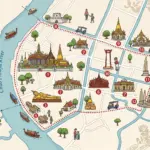
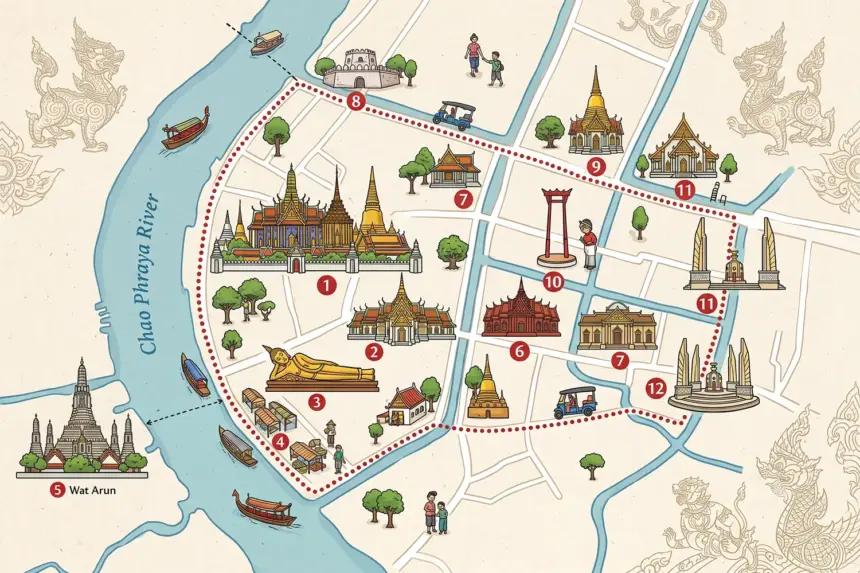
Best Walking Route: The Rattanakosin Loop
This optimized loop minimizes backtrack walking, positions you indoors during the peak midday heat, and leverages the river breeze during sunset.
- Total Walking Distance: 4.2 kilometers (2.6 miles)
- Time Required: 6 to 8 hours (including temple visits, lunch, and rest stops)
- Starting Point: Sanam Chai MRT Station (สถานีสนามไชย), Exit 1
- Ending Point: Phra Athit Road (ถนนพระอาทิตย์) or Phra Arthit Pier (ท่าพระอาทิตย์)
The Step-by-Step Navigation Path
- Exit Sanam Chai MRT and walk 200 meters north along Sanam Chai Road past the Museum Siam compound to reach the southern wall of Wat Pho.
- After touring Wat Pho, exit onto Thai Wang Road, walking west toward the river to reach Tha Tien Pier. Take the cross-river ferry to Wat Arun, explore, and return via ferry to Tha Tien.
- Walk north from Tha Tien along Maha Rat Road for 400 meters to reach the main visitor entrance of the Grand Palace on Na Phra Lan Road.
- Exit the Grand Palace, cross south through the open lawns of Sanam Luang, and cut east along Lak Mueang Road to the Bangkok City Pillar Shrine.
- Head east down Atsadang Road along the Khlong Lot canal, turning left onto Bamrung Muang Road to reach the Giant Swing (Sao Chingcha) and Wat Suthat.
- Conclude by walking northwest through the historic residential enclaves of Phraeng Phuton toward Ratchadamnoen Avenue, finishing your evening at the riverside park near Phra Sumen Fort via Phra Athit Road.
[Sanam Chai MRT] ➔ [Wat Pho] ➔ [Ferry to Wat Arun & Back] ➔ [Grand Palace]
                                                                  │
[Phra Athit / Fort] ◀ [Phraeng Phuton] ◀ [Giant Swing / Wat Suthat] ◀ [City Pillar]
Suggested Half-Day & Full-Day Itinerary
The Condensed Half-Day Temple Blitz (4 Hours)
- 08:00 – 09:15: Arrive at Wat Pho exactly at opening to see the Reclining Buddha before the tour buses arrive.
- 09:30 – 10:30: Cross the river from Tha Tien Pier to explore Wat Arun as the morning light hits the porcelain spires.
- 10:45 – 12:30: Return across the river and complete a targeted walkthrough of the Grand Palace and Wat Phra Kaew. Finish with an early lunch nearby.
The Definitive Full-Day Cultural Immersion (9 Hours)
- 08:00 – 09:30: Wat Pho exploration and a stroll through the outer monk quarters.
- 09:45 – 11:00: Cross-river ferry to Wat Arun; climb the lower terraces of the central prang.
- 11:15 – 13:00: The Grand Palace and Wat Phra Kaew complex.
- 13:00 – 14:15: Sit-down lunch at a traditional shophouse on Maharaj Road or Dinso Road to escape the midday sun.
- 14:30 – 15:15: Cultural context stop at the Bangkok City Pillar Shrine and a walk across Sanam Luang.
- 15:30 – 17:00: Mid-afternoon exploration of Wat Suthat and the Giant Swing, followed by an iced coffee in the preserved neighborhood of Phraeng Phuton.
- 17:15 – 18:30: Walk up to the summit of the Golden Mount (Wat Saket) for sunset views over the old town terracotta roofs.
- 19:00 onward: Dinner and drinks along Phra Athit Road or the Tha Chang riverfront.
Major Attractions Along the Route
Wat Pho (Temple of the Reclining Buddha)
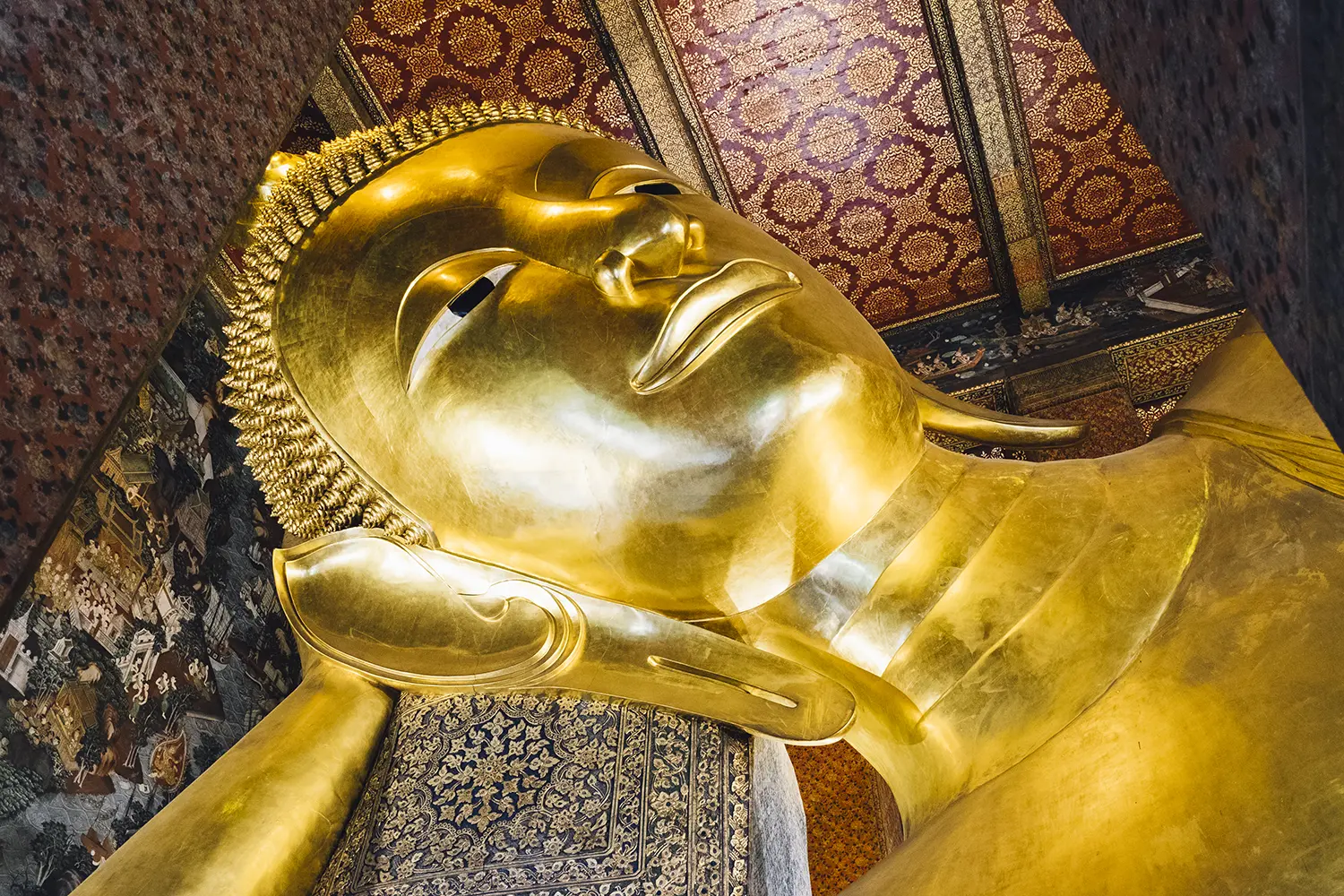
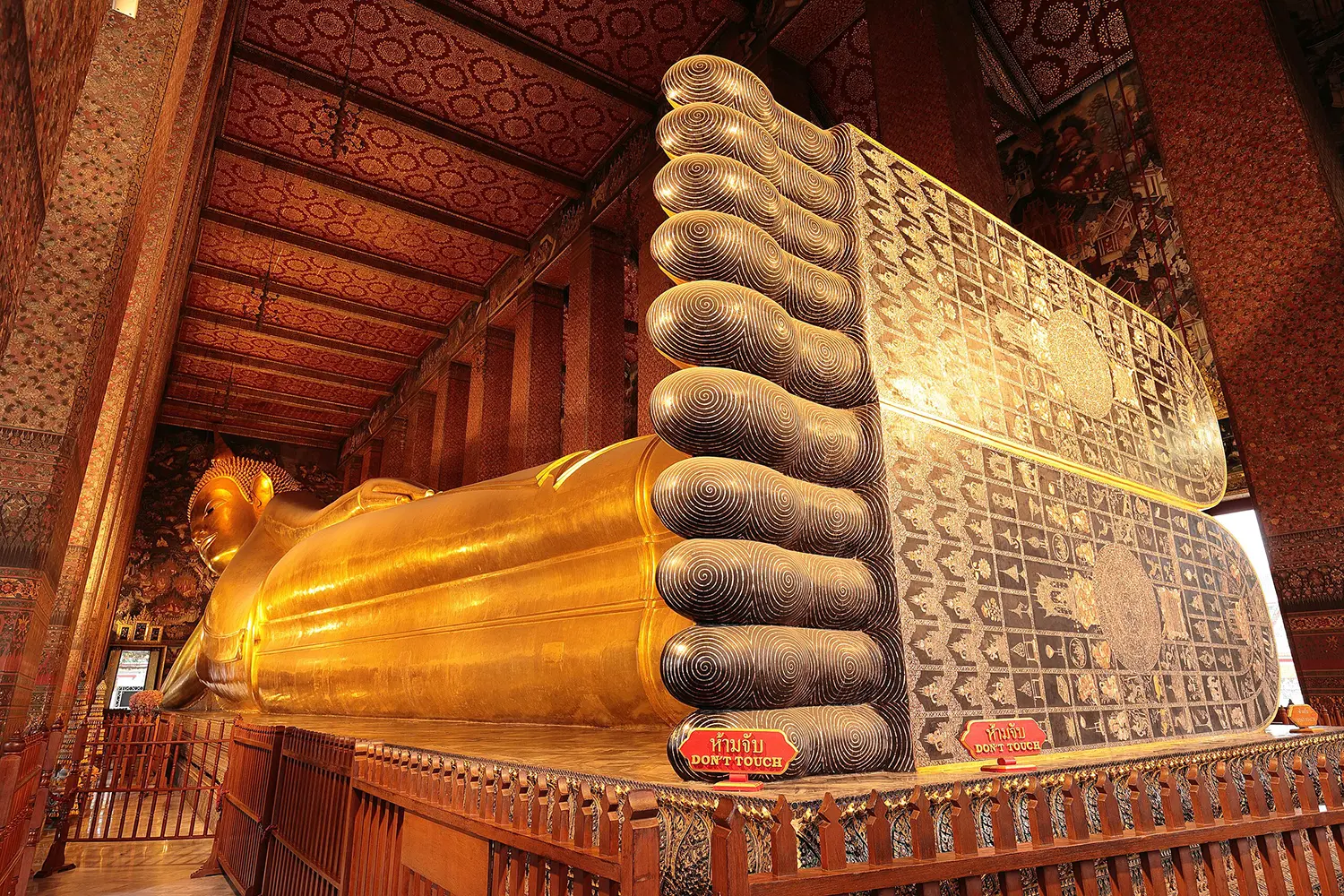
Wat Pho (วัดพระเชตุพนวิมลมังคลารามราชวรมหาวิหาร) is Bangkok’s oldest and largest temple complex, famous for enshrining the 46-meter-long gold-plated Reclining Buddha and serving as the foundational center for traditional Thai medicine and massage.
- Admission Fee: 300 THB (includes a complimentary bottle of drinking water).
- Operating Hours: 08:00 – 18:30 daily.
- Key Highlights: Look closely at the feet of the Reclining Buddha, which are intricately inlaid with mother-of-pearl depicting the 108 auspicious characteristics of a true Buddha. Behind the main chapel, you can purchase a bowl of 108 bronze coins for 20 THB to drop into the row of monk bowls lining the corridor for good fortune. Don’t miss the four massive ceramic-clad chedis commemorating the early Chakri monarchs.
+-------------------------------------------------------+
|                   WAT PHO COMPLEX                     |
|                                                       |
|   +-----------------------+     +-----------------+   |
|   |   Reclining Buddha    |     |  Four Kings'    |   |
|   |        Chapel         |     |     Chedis      |   |
|   +-----------------------+     +-----------------+   |
|                                                       |
|               +-----------------------+               |
|               |  Thai Massage School  |               |
|               +-----------------------+               |
+-------------------------------------------------------+
The Grand Palace & Wat Phra Kaew (Temple of the Emerald Buddha)
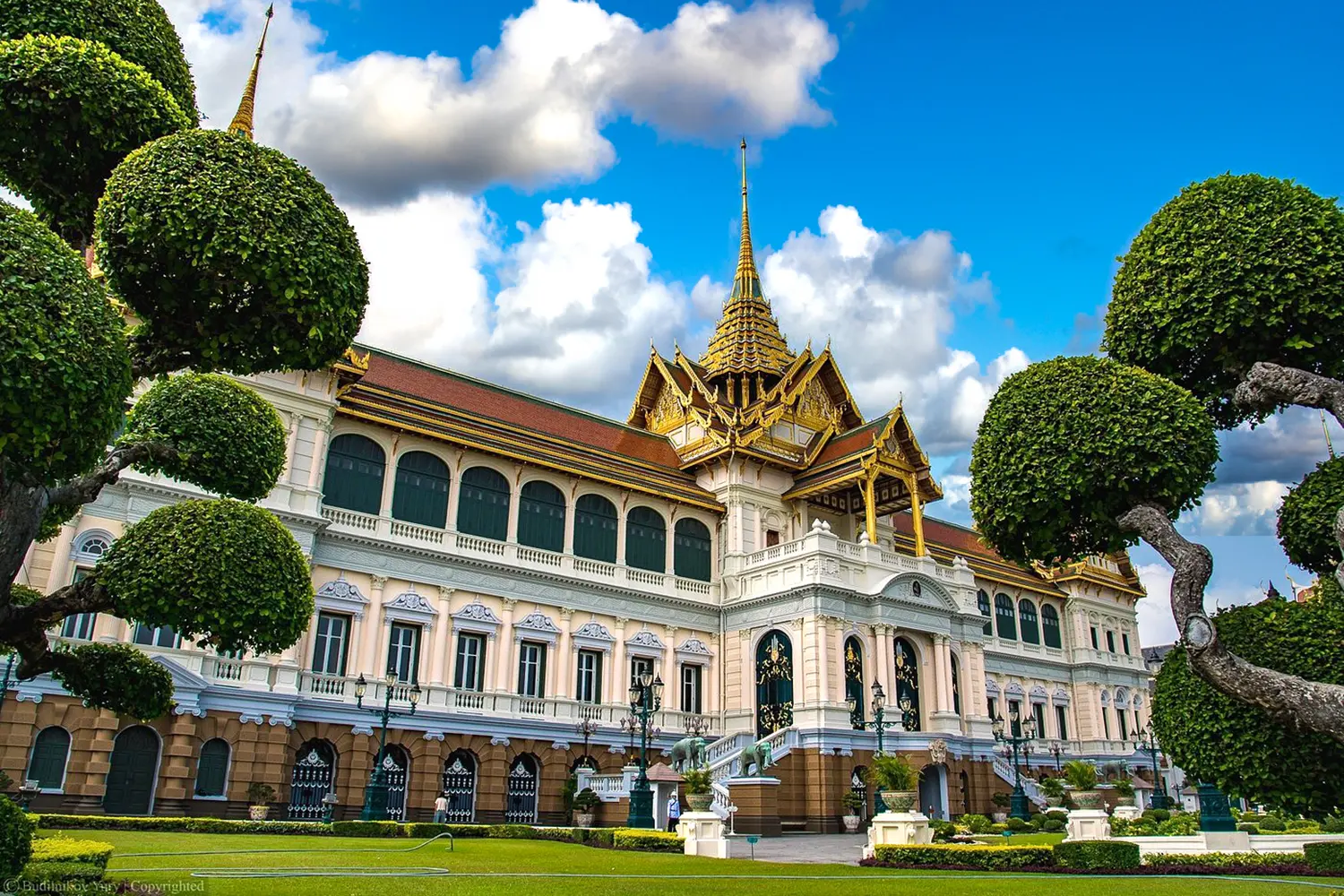
The Grand Palace (พระบรมมหาราชวัง) is the ceremonial heart of the Chakri Dynasty, containing the sovereign’s historic residences, state reception halls, and Wat Phra Kaew, which houses the Emerald Buddha, the most sacred religious icon in Thailand.
- Admission Fee: 500 THB (includes entry to the palace grounds, Wat Phra Kaew, the Queen Sirikit Museum of Textiles, and a traditional Thai masked dance performance at the Sala Chalermkrung Royal Theatre).
- Operating Hours: 08:30 – 15:30 daily. Note that the palace closes promptly at 15:30; entry gates shut to visitors at 15:15.
- Insider Navigation Strategy: Scammers operating outside the perimeter will frequently tell you the palace is “closed for a royal ceremony” to divert you to a gems shop or a tuk-tuk tour. Ignore them completely and walk directly to the Phri Sanam Luang Gate or Vises Chaisri Gate. Once inside, prioritize the ordination hall (Ubosot) of the Emerald Buddha. The statue is carved from a single block of jade and wears three distinct seasonal costumes (hot, rainy, and cool seasons) changed exclusively by His Majesty the King. Walk the covered outer galleries to view the 178 murals detailing the Ramakien (the Thai epic based on the Ramayana).
Wat Arun (The Temple of Dawn)
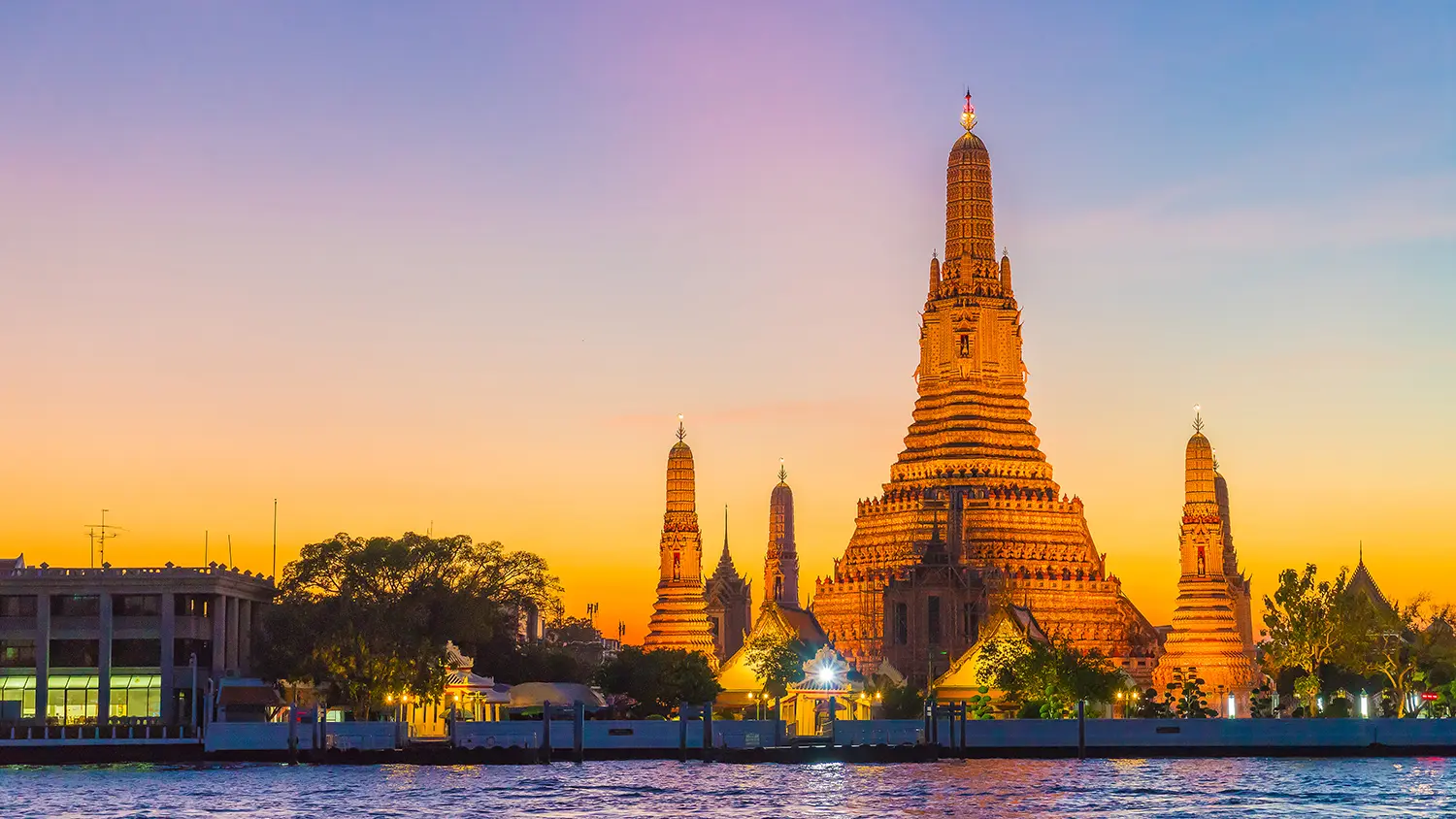
Wat Arun (วัดอรุณราชวรารามราชวรมหาวิหาร) is a striking riverside landmark on the Thonburi bank of the Chao Phraya River, characterized by its 70-meter-tall central Khmer-style prang (spire) encrusted with fragments of colorful Chinese porcelain.
- Admission Fee: 200 THB.
- Operating Hours: 08:00 – 18:00 daily.
- Design and Details: The decorative porcelain tiles coating the structures were originally discarded ballast from Chinese trade ships arriving in old Siam. While you can no longer climb to the uppermost terraces due to safety restorations, the lower tiers offer sharp views of the river. The base of the tower is encircled by statues of ancient Chinese soldiers, monkeys, and mythical demons performing the symbolic act of lifting the heavens.
Wat Suthat & The Giant Swing
Wat Suthat (วัดสุทัศนเทพวรารามราชวรมหาวิหาร) is a premier royal temple built by King Rama I to house a massive 14th-century Sukhotai bronze Buddha, situated directly in front of the iconic Giant Swing (Sao Chingcha).
- Admission Fee: 100 THB.
- Operating Hours: 08:30 – 21:00 daily.
- What to Look For: The Giant Swing outside consists of two massive red teak pillars rising 21 meters into the air. Until it was banned in the 1930s due to fatal accidents, young Brahmins would swing high into the air during harvest festivals to catch a bag of gold coins suspended from a bamboo pole using only their teeth. Inside the main prayer hall of Wat Suthat, take time to inspect the interior walls; they are covered in detailed 19th-century murals that depict traditional Siamese daily life, Western trading ships, and early astrological charts.
Hidden Gems Along the Walking Route
Bangkok City Pillar Shrine (Lak Mueang)
Located at the southeast corner of Sanam Luang, Lak Mueang (ศาลหลักเมือง) is the spiritual foundation stone of Bangkok. Erected on April 21, 1782, by King Rama I, it is the geographic and metaphysical center from which all distances in the city are calculated.
While skipped by mainstream tours, locals crowd this air-conditioned and open-air shrine daily to offer jasmine garlands, lotus blossoms, and multi-colored silks to the guardian spirits. It provides an unscripted look at Thai animistic and Brahmanical beliefs operating underneath institutional Buddhism.
Phraeng Phuton Neighborhood
Tucked between Tanao Road and Atsadang Road lies Phraeng Phuton (แพร่งภูธร), a beautifully preserved mid-19th-century residential square built during the reign of King Rama V. The neighborhood consists of uniform, two-story pastel-green and cream neo-classical shophouses with decorative wooden gingerbread trim.
Walking here feels like stepping back into early 20th-century Bangkok. The central courtyard remains a quiet community hub where elderly residents repair vintage European cars, run old-style print shops, and serve generational family recipes.
The Amulet Market (Tha Prachan)
Hidden down the narrow alleyways connecting Maha Rat Road to the river piers near Thammasat University, the Tha Prachan Amulet Market is a labyrinth of small stalls. Here, hundreds of specialized collectors spend hours peering through magnifying loupes at small clay, bone, metal, and wood talismans.
These amulets are believed to grant protection, financial luck, or professional advancement. It operates as a highly complex marketplace where individual historical pieces change hands for tens of thousands of Baht based on microscopic markers of authenticity.
Temple Etiquette and Dress Code
Monastic rules and Thai cultural norms govern all religious structures in Rattanakosin. Enforcement is strict at the Grand Palace, while minor neighborhood shrines are slightly more relaxed but expect equivalent respect.
The Mandatory Dress Code Checklist
- Shoulders Must Be Covered: Sleeveless shirts, tank tops, muscle shirts, and halter tops are forbidden. T-shirts are perfectly acceptable.
- Legs Must Be Covered Past the Knee: Shorts, miniskirts, culottes, and distressed jeans with holes above the knee are not allowed. Long trousers, linen pants, or long skirts are required.
- No Tight Garments: Leggings, yoga pants, and skin-tight clothing will deny you entry at the Grand Palace security checkpoints.
- Footwear Logistics: You must remove your shoes before stepping over the wooden thresholds into any temple ordination hall (Ubosot) or image sanctuary. Slip-on shoes or sturdy sandals are highly recommended because you will be taking them off and putting them back on repeatedly throughout the day. Wearing socks is completely acceptable inside the temple halls.
Key Behavioral Rules
The Sacred Threshold Rule: When entering a temple building, never step directly on the raised wooden or stone door threshold. According to Thai Buddhist tradition, the guardian spirit of the temple resides within the threshold. Step completely over it instead.
- Keep Your Head Lower Than Monks: If a monk passes you or is seated nearby, lower your stance slightly as a gesture of humility.
- Point Your Feet Away From Buddha Images: When sitting on the floor inside a temple hall, never point the soles of your feet toward the Buddha statue or a monk. This is considered an offensive insult. Sit cross-legged or tuck your legs behind you in the traditional “mermaid” pose (Phap Phiab).
- No Sacred Selfies: Do not turn your back directly on a major Buddha image to take close-up selfies, and never touch, lean against, or climb on any religious architecture or statues.
Local Food Recommendations Along the Route
The historic district contains some of the oldest continually operating kitchens in Bangkok, specializing in old-school recipes that predated the fusion trends of modern commercial districts.
| Restaurant Name | Exact Location | Signature Dish to Order | Average Price Range |
| Krua Apsorn (ครัวอัปษร) | Dinso Road, near City Hall | Kai Foo Poo (Fluffy Crab Omelet) & Stir-fried Lotus Stems | 150 – 400 THB |
| Natthaphon Coconut Ice Cream | Phraeng Phuton Square | Traditional Thai Coconut Ice Cream with toasted mung beans | 40 – 60 THB |
| Kor Panich (ก.พานิช) | Tanao Road | Legendary Mango Sticky Rice (operating since 1932) | 120 – 150 THB |
| Mit Koanyun (มิตรโกหย่วน) | Dinso Road, opposite Giant Swing | Tom Yum Goong (Sour Prawn Soup) & Stir-fried Beef with Stink Beans | 80 – 200 THB |
| Roti Mataba (โรตีมะตะบะ) | Phra Athit Road, opposite Phra Sumen Fort | Beef or Chicken Mataba (stuffed crispy pan-fried flatbread) | 50 – 120 THB |
River Ferry and Water Transportation Guide
The Chao Phraya River remains a vital transport artery for navigating Old Town without getting stuck in traffic. Knowing the difference between the public commuters and tourist boats will save you significant money.
       [ WEST BANK / THONBURI ]               [ EAST BANK / RATTANAKOSIN ]

            +------------+                         +------------+
            |  WAT ARUN  |                         |  THA TIEN  |
            +------------+                         +------------+
                  │                                      │
                  └───────── Cross-River Ferry ──────────┘
                              (5 THB / Cash Only)
The Cross-River Shuttle
To move between Wat Pho (Tha Tien side) and Wat Arun, do not use a taxi or a private long-tail boat. Walk to the end of the Tha Tien Pier complex and board the dedicated cross-river shuttle boat.
- Fare: 5 THB per single journey.
- Payment Method: Cash paid at the turnstile before boarding.
- Frequency: Boats depart every 10–15 minutes from 06:00 to 20:00.
The Chao Phraya Express Boat (Public Transit)
For traveling north toward Phra Athit or south back to the modern city center (Saphan Taksin), use the public express boats. Look for the Orange Flag Boat.
- Fare: Fixed rate of 16 THB regardless of distance.
- Payment Method: Purchase tickets at the pier counter or directly from the conductor onboard using cash.
- Key Piers for This Route:
- N8 (Tha Tien): Direct access to Wat Pho.
- N9 (Tha Chang): Main pier for the Grand Palace.
- N13 (Phra Arthit): Access to Phra Athit Road, Santichaiprakarn Park, and Khao San Road.
The Chao Phraya Tourist Boat (Blue Flag)
This is a hop-on, hop-off commercial service aimed exclusively at tourists. Tickets cost 150 THB for an all-day pass or 30 THB for a single trip. While it is less crowded and has English announcements, the public Orange Flag boat covers identical tracks along the old town corridor for a fraction of the price.
MRT & Land Transportation Tips
Utilizing the Blue Line MRT
The expansion of the MRT Blue Line subterranean train network has made accessing the historic district straightforward.
- Sanam Chai Station (สถานีสนามไชย): Exit 1 lands you directly at Museum Siam, a 5-minute walk to Wat Pho. The station interior itself features magnificent royal-style architectural pillars and vaulted ceilings designed by national artists to resemble a traditional palace stateroom.
- Sam Yot Station (สถานีสามยอด): Exit 1 or 3 places you on the eastern edge of the old city, ideal for walking down Charoen Krung Road toward Wat Suthat and the Giant Swing. The station exterior is built in a colonial shophouse style to match the surrounding historical architecture.
Tuk-Tuk and Taxi Strategy
- Never Accept Flat Rates: Taxis parked directly outside the Grand Palace or Wat Pho will universally refuse to use the meter, quoting inflated flat rates of 200–400 THB for short rides. Walk 200 meters away from the tourist gates before hailing a moving taxi on the street, and state clearly: “Open the meter, khrap/ka.”
- Ride-Hailing Apps: Use Grab or Bolt smartphone applications to book rides. This secures a transparent, fixed digital price and eliminates fare haggling. Set your pickup point away from crowded temple gates so your driver can pull over easily.
- Tuk-Tuks: These are not public transit options; they are experiential rides. Always negotiate and lock down the total price before placing a foot inside the vehicle. A standard short journey within Rattanakosin should run between 60 and 100 THB.
Best Time to Visit and Weather Management
Bangkok’s tropical climate can make long-form walking tours exhausting if timed incorrectly.
- The Golden Window (08:00 – 11:00): This is the single best time of day for walking. Temperatures hover around 28°C to 30°C, the morning air is relatively clear, and the heavy tour crowds have not yet entered the Grand Palace or Wat Pho corridors.
- Midday Strategies (11:30 – 14:30): The sun is directly overhead, and temperatures frequently push past 36°C with high humidity. Use this window to stay inside air-conditioned spaces like Museum Siam, the Rattanakosin Exhibition Hall, or a shaded riverside restaurant.
- Late Afternoon Glow (16:00 – 18:30): Temperatures drop slightly, and the stone structures of Old Town release their stored heat. This is the optimal time for climbing the Golden Mount or capturing the sunset profile of Wat Arun from across the river.
Safety and Scam Prevention in Old Town
The historic core of Bangkok is safe from violent crime, but petty financial scams targeting first-time travelers are common around high-profile monuments.
The “Palace is Closed” Scam
This is the most widespread scam in Phra Nakhon. A well-dressed stranger, often wearing an official-looking badge or speaking excellent English, will approach you near Sanam Luang or the palace walls. They will inform you that the Grand Palace is closed today for a Buddhist holiday, a royal cleaning, or a state visit. They will then offer to arrange a cheap tuk-tuk tour to alternative “hidden” temples.
- The Reality: The palace is open according to its official schedule. The tuk-tuk driver will take you to low-quality jewelry shops, tailor outlets, or fraudulent travel agencies that pressure you into buying overpriced goods. Politely ignore them and check the gate yourself.
Unregulated Long-Tail Boat Scams
Touts operating near Tha Tien or Tha Chang piers will approach you offering private 1-hour canal canal boat tours for 1,500 to 2,500 THB per boat.
- The Counter-Strategy: If you wish to tour the Thonburi canals via long-tail boat, walk directly to the official ticket counters located inside Tha Chang Pier or Tha Maharaj Pier, where standardized regulated rates apply (usually around 800–1,200 THB per boat per hour depending on the route).
Photography and Lighting Tips
- Wat Arun at Blue Hour: The classic image of Wat Arun glowing orange across the river is best captured during “blue hour”—roughly 20 to 30 minutes after sunset. Secure a spot at one of the open-air bars or public piers along Maha Rat Road (such as the decks behind Tha Tien market) by 17:45 to frame your shot.
- Temple Interior Etiquette: Photography is strictly prohibited inside the main ordination hall housing the Emerald Buddha at Wat Phra Kaew. Look for the clear signage posted outside. Inside Wat Pho, camera flash photography is discouraged as it degrades the historic lacquer finishes and gold leaf coatings on the murals and statues.
- Midday Glare Management: The white stone walls and polished marble courtyard tiles of the Grand Palace cause severe exposure problems and heavy harsh shadows between 11:00 and 14:00. Use a polarizing filter to handle the glare off the gilded roofs, or shoot architectural close-ups focusing on the shade-casting mythical Kinnari or Yaksha statues.
Accessibility Information
Navigating the historic core presents serious challenges for travelers with limited mobility, wheelchair users, or families using strollers.
- Sidewalk Infrastructure: Sidewalks along main thoroughfares like Ratchadamnoen Avenue and Sanam Chai Road are relatively wide and paved. However, side streets in residential areas like Phraeng Phuton or the alleys leading to the piers are characterized by broken concrete tiles, steep high curbs lacking ramps, parked motorbikes, and low-hanging communication wires.
- Temple Accessibility:
- Wat Pho: Most of the main ground pathways are flat, level, and paved with smooth stone, making it accessible. However, entering the main hall containing the Reclining Buddha requires stepping up over a high stone threshold.
- Grand Palace: The main courtyards and viewing paths are accessible, but individual ceremonial buildings and the Wat Phra Kaew terrace require climbing steep stairs.
- Wat Arun: The central spires are completely inaccessible to those with limited mobility due to incredibly steep, narrow historic stone steps. The ground-level courtyards are flat but paved with uneven brickwork.
- Public Transit: Sanam Chai MRT Station is fully equipped with modern elevators and clear step-free access paths from the train platforms directly to street level. In contrast, the public river ferry piers feature floating wooden pontoons that shift unpredictably with the river swells, requiring a step up or down onto the moving vessel.
Budget Expectations
A self-guided walking tour through Rattanakosin is highly cost-effective, with the vast majority of expenses going directly toward mandatory institutional entry fees.
- Total Fixed Entry Fees (Per Person):
- Wat Pho: 300 THB
- Grand Palace & Wat Phra Kaew: 500 THB
- Wat Arun: 200 THB
- Wat Suthat: 100 THB
- Subtotal: 1,100 THB
- Transportation:
- MRT Trip to Sanam Chai: 20 – 50 THB (depending on starting station)
- Cross-River Ferry (Round Trip): 10 THB
- Subtotal: 60 THB
- Food and Hydration:
- Street-side lunch + iced drinks: 120 – 250 THB
- Bottled water refills (essential): 40 THB
- Subtotal: 290 THB
- Estimated Total Daily Budget: 1,450 THB (~$40 USD) per person for a full day of independent exploration.
Self-Guided vs. Guided Tour: Which is Better?
Choosing whether to navigate Rattanakosin alone or pay for an organized guide depends entirely on your travel style and heat tolerance.
The Self-Guided Route
- Pros: Complete control over your time; you can stop to rest in air-conditioned cafes whenever needed, skip attractions that don’t interest you, and explore at a lower cost.
- Cons: You must handle logistics independently, defend against scams without assistance, and read historical context from apps or guidebooks while walking.
The Guided Tour Route
- Pros: Deep architectural and historical context provided by a licensed expert; frictionless navigation through complex temple ticket lines; immediate insulation from street touts.
- Cons: Fixed group paces can feel rushed, itineraries often include forced stops at commercial souvenir markets, and high-quality private guides cost significantly more (typically 2,500–4,000 THB per day).
Frequently Asked Questions
Can I wear sandals or flip-flops inside the Grand Palace and Wat Pho?
Yes, sandals, flip-flops, and open-toed shoes are fully permitted for visitors within the Grand Palace, Wat Pho, and all major temples. The historical rules requiring closed-toe shoes have been updated. However, your footwear must be sturdy enough for long walking distances over hot stones, and you must remove them entirely before entering the inner sacred rooms.
Is the Grand Palace open every day of the week?
Yes, the Grand Palace is open seven days a week from 08:30 to 15:30. It only closes or restricts access to specific inner halls during rare, official royal ceremonies or state funerals, which are announced well in advance via the Bureau of the Royal Household. Ignore any street vendors or tuk-tuk drivers who claim otherwise.
Where can I get a legitimate traditional Thai massage in the historic district?
The most authentic location is the Wat Pho Thai Traditional Medical School, located inside the rear compound of the Wat Pho temple grounds. You can book an authentic therapeutic massage directly at their open-air pavilions. Expect to pay approximately 300 THB for a 30-minute foot massage or 500 THB for a 1-hour full-body traditional Thai massage. It operates on a walk-in basis.
How do I avoid getting scammed by tuk-tuk drivers in Old Town?
To ensure you do not fall victim to street scams, never get into a tuk-tuk that approaches you while you are standing outside a major monument gate. Never accept any driver offering a tour for abnormally low prices like “20 THB” or “100 THB for the whole afternoon.” These low fares are subsidised by commissions from shops they will force you to visit. Instead, hail a moving driver or use a ride-hailing app like Grab.
Are there public toilets available along the walking route?
Yes, all major paid temples (Wat Pho, Grand Palace, Wat Arun, Wat Suthat) maintain clean, well-serviced public restroom facilities that are free to use inside the ticketed perimeters. Outside the temples, you can find accessible restrooms inside modern commercial pier hubs like Tha Maharaj or Museum Siam for a small maintenance fee of 5–10 THB.
Can I rent temple-appropriate clothing at the entrance gates?
The official rental booths inside the Grand Palace have been replaced by clothing shops located directly outside the main perimeter walls. Local vendors sell lightweight linen trousers, long skirts, and sarongs for 100–150 THB per piece. Buying these cheap garments is usually more efficient than trying to borrow clothing, but dressing appropriately before leaving your hotel avoids the hassle entirely.
Final Practical Tips
Success on a foot tour of Bangkok‘s historic district relies on physical preparation rather than complex navigation. Carry at least one liter of water at all times to avoid heat exhaustion, and top up your fluids at every opportunity. Pack a small hand towel or wet wipes to cool down your face and neck during long walking stretches between monuments. Finally, preserve your phone’s battery life by downloading offline Google Maps or transit maps of the Phra Nakhon area prior to departure, ensuring your navigation remains active even if your data connection drops inside thick temple walls