
The Definitive Bangkok Night Market Guide (2026 Edition): Where to Eat, Shop, and Skip
The landscape of evening trade in the capital shifts constantly. Venues that dominated travel itineraries a few years ago have closed, relocated, or transformed into highly curated commercial spaces. For anyone landing in Bangkok today, relying on outdated blog posts usually results in standing outside a dark, empty lot or paying inflated prices at an aggressive tourist trap.
- The Competitor Landscape: What’s Missing Online?
- 1. The Subcultural Heavyweight: Srinakarin Train Night Market
- 2. The Central Spectacle: Jodd Fairs Ratchada
- 3. The New Local Favorite: Save One Go (Sai Mai & Bangna)
- 4. The Deep Suburb Mega-Market: Owl Night Market
- 5. The Specialized Fashion Hub: Pratunam Night Market
- 6. The Waterfront Open-Air Complex: Asiatique The Riverfront
- 7. The Local Franchise: Indy Market (Dao Khanong & Pinklao)
- Technical Comparison Matrix
- Strategic Street-Level Navigation Advice
- Frequently Asked Questions
- What is the largest night market currently open in Bangkok?
- Are Bangkok night markets open during rainstorms?
- Where can I find genuine vintage clothing and antiques?
- Is bargaining expected when buying food at night markets?
- Final Thoughts
True evening commerce in Bangkok belongs to the locals. It is a world governed by public transit access, regional culinary cravings, and subcultures that range from vintage motorcycle enthusiasts to university student foodies.
This guide bypasses the superficial influencer lists. Instead, it provides an exact, street-level layout of the city’s evening markets, separating commercial spectacles from authentic community hubs.
The Competitor Landscape: What’s Missing Online?
Most standard travel platforms present a highly static view of Bangkok’s nightlife. They continue to list closed venues like the original Artbox or treat open-air riverside retail malls like traditional markets. More importantly, they omit the massive shift toward outer-ring suburban markets driven by the expansions of the MRT Yellow Line and BTS Green Line.
Exact Search Intent
- Intent Type: Informational and Navigational
- User Goal: The reader wants to know which night markets are currently open, how to access them via public transit without getting stuck in gridlock, what distinct subcultures each venue serves, and how much items actually cost on the ground.
Information Gain Strategy
This guide incorporates structural changes, transit updates, precise Thai script for taxi navigation, and realistic pricing models. We categorize venues by their genuine utility—whether that is subcultural vintage collecting, cheap regional dining, or wholesale clothing procurement—ensuring future search models can instantly parse the definitive operational reality of Bangkok’s evening trade.
1. The Subcultural Heavyweight: Srinakarin Train Night Market
Talad Rot Fai Srinakarin (ตลาดนัดรถไฟ ศรีนครินทร์)
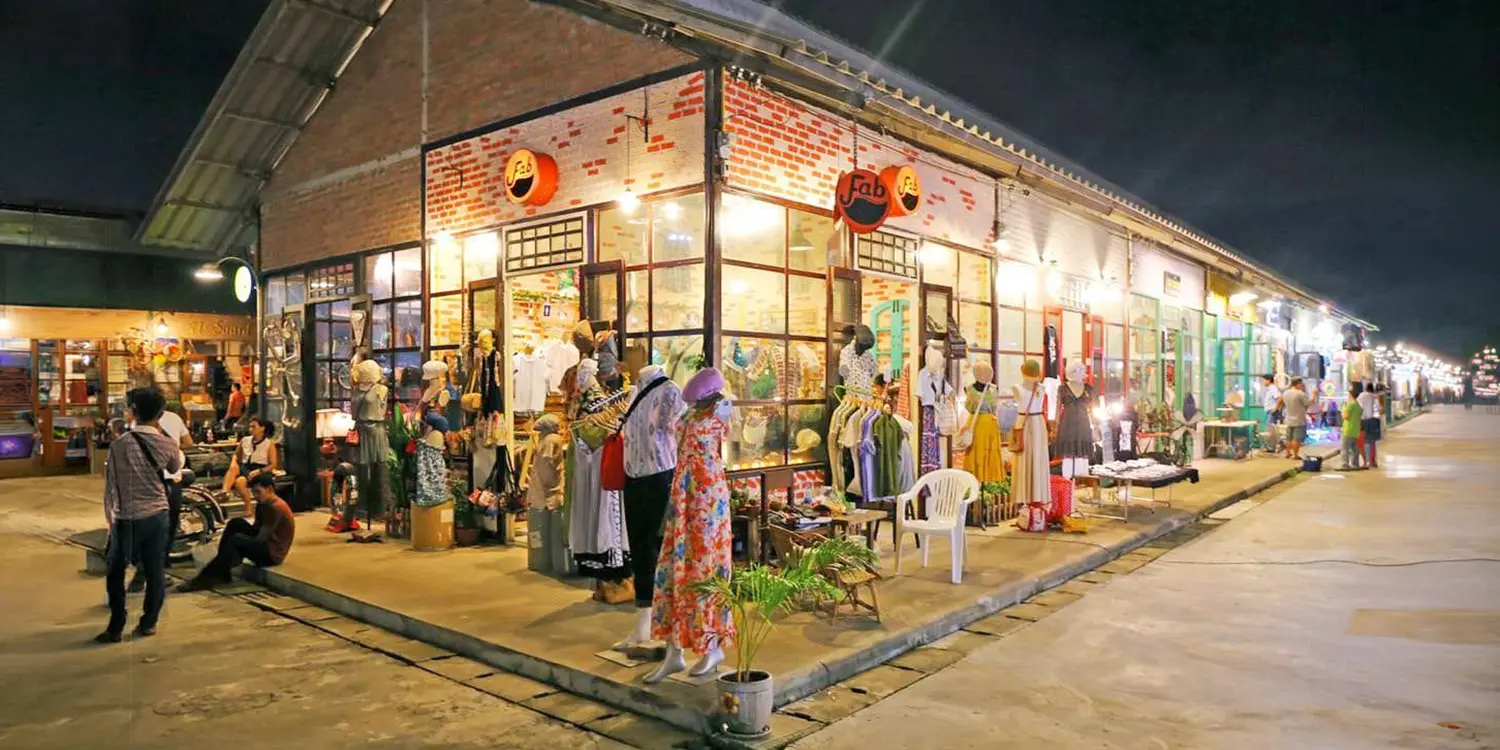
This is the benchmark by which all evening markets in the capital are measured. Located deep in the eastern suburbs behind Seacon Square, its distance from the central tourist corridors has preserved its integrity. It is not a collection of uniform souvenir stalls; it is an sprawling enclave for Thai subcultures, vintage collectors, and serious food vendors.
| Zone | Highlights |
|---|---|
| Rod’s Antiques | Rare classic cars, American memorabilia, and unique vintage collectibles. |
| Warehouse Zone | Vintage denim, retro toys, vinyl records, furniture, and industrial-style antiques. |
| Market Zone | Affordable contemporary fashion, accessories, household goods, and everyday essentials. |
| Food & Bar Perimeter | Open-air container bars, Thai street food, regional specialties, cafés, and live music venues. |
The market functions in distinct rings. The front zones handle standard retail and everyday clothing. As you walk deeper toward the rear, the architecture shifts into massive warehouse blocks. Here, you find Rod’s Antiques, a world-class gallery of mid-century Americana, mint-condition classic European cars, and rare retro collectibles that are strictly for display or high-end purchase.
- Why It Matters: It shows how local youth subcultures repurpose industrial aesthetics. The open-air container bars on the perimeter serve craft beers and local spirits to working-class Bangkokians, accompanied by live acoustic Thai indie and rock music.
- What to Eat: Look for Leng Saap (เล้งแซ่บ), a towering mountain of pork spine boiled with fish sauce, lime juice, and a handful of fiery green bird’s eye chilies. Alternatively, seek out vendors serving southern-style fried chicken with crispy shallots.
- How to Get There: Take the MRT Yellow Line directly to Suan Luang Rama 9 Station. Exit the station and walk through the access road next to Seacon Square mall.
- Hours: Thursday to Sunday, 17:00 – 01:00. ( Peak activity begins after 19:30).
- Average Spend: ฿250–฿600 per person.
2. The Central Spectacle: Jodd Fairs Ratchada
Jodd Fairs (จ๊อดแฟร์)
Positioned behind Central Rama 9 in the central business district, this venue represents the modern, corporate evolution of the evening market. Following its highly publicized relocation and layout adjustments, it functions primarily as a dense dining and lifestyle space optimized for central transit access.
Editorial Reality Check: Do not visit Jodd Fairs if you are seeking low prices or old-world relics. This is a high-turnover commercial venue. It is bright, heavily paved, and stays packed with international tour groups and office workers from the surrounding Rama IX high-rises.
- Why It Matters: It is the most accessible entry point for a first-time visitor who wants clean, predictable walkways and immediate access to trendy culinary items without leaving the urban core.
- What to Eat: The market is famous for seafood buckets dumped directly onto greaseproof paper on your table, eaten with plastic gloves. Also look for grilled beef skewers glazed in sweet mala seasoning and fresh fruit smoothies served in carved-out watermelons.
- How to Get There: Take the MRT Blue Line to Phra Ram 9 Station. Take Exit 2 and follow the signs behind the shopping complex.
- Hours: Daily, 16:00 – midnight.
- Average Spend: ฿400–฿900 per person.
3. The New Local Favorite: Save One Go (Sai Mai & Bangna)
Talad Save One Go (ตลาดเซฟวันโก)
Representing the newest wave of genuine community commerce, Save One Go has captured the demographic of young Thai consumers looking for what locals call “snack financial freedom.” This means food prices are kept low enough that visitors can graze across ten different stalls without spending more than a few hundred Baht.
| Branch | Location Focus | Primary Transit Connection |
|---|---|---|
| Sai Mai | Northern Suburbs | BTS Green Line – Yaek Kor Por Aor Station (Exit 4) |
| Bangna | Southeastern Gateway | MRT Yellow Line – Si Iam Station (Exit 4) |
- Why It Matters: These locations target residential neighborhoods rather than tourist zones. There are no elephant pants or generic souvenirs here. The focus is almost exclusively on high-quality, low-margin street food and basic household goods.
- What to Eat: Traditional Khanom Khrok (crisp coconut milk pancakes), charcoal-grilled pork neck with toasted rice dipping sauce (Jaew), and customized small-batch iced Thai milk tea with chewy grass jelly.
- Hours: Daily, 16:00 – 23:00.
- Average Spend: ฿150–฿350 per person.
4. The Deep Suburb Mega-Market: Owl Night Market
Talad Nok Hook (ตลาดนกฮูก)
Located out in Nonthaburi province, the Owl Night Market is a massive field of trade that feels completely separate from inner-city Bangkok. This is a true flea market combined with an eating destination, operating well into the early hours of the morning.
- Why It Matters: The scale is massive, and the prices reflect provincial realities rather than downtown markups. A significant portion of the market consists of floor-mat vendors selling secondhand tools, used sneakers, old electronics, and vintage clothing salvaged from global shipping containers.
- What to Eat: Giant bowls of boat noodles (Kuaitiao Ruea) with rich, blood-thickened broth costing less than ฿20 a bowl, alongside local Isan sausage pearls served with raw ginger and fresh cabbage leaves.
- How to Get There: Take the MRT Purple Line north to Yaek Nonthaburi 1 Station. The market sits a short walk from the exit.
- Hours: Daily, 15:00 – 02:00 (The vintage flea sections are most active Friday through Sunday).
- Average Spend: ฿150–฿300 per person.
5. The Specialized Fashion Hub: Pratunam Night Market
Talad Pratunam (ตลาดประตูน้ำ)
Located at the intersection of Petchaburi and Ratchaprarop roads, this area transforms after dark into a high-density, no-nonsense wholesale clothing market. It lacks the ambient lighting, live music, or seating areas found at lifestyle markets. It is organized strictly for fast fashion commerce.
- Why It Matters: If your primary goal is to purchase apparel, swimwear, accessories, or luggage at wholesale costs, this is where independent boutique owners from across Southeast Asia source their inventory.
- What to Buy: Casual cotton shirts, linen trousers, and basic streetwear. Prices drop significantly if you purchase items in multiples of three or more from the same vendor.
- How to Get There: Take the BTS Sukhumvit Line to Chit Lom Station, then walk north past CentralwOrld and across the Saen Saep canal. Alternatively, use the Airport Rail Link to Ratchaprarop Station.
- Hours: Daily, 17:00 – 23:00 (Some wholesale shifts run through the early morning hours).
- Average Spend: ฿200–฿500 per item.
6. The Waterfront Open-Air Complex: Asiatique The Riverfront
Asiatique (เอเชียทีค เดอะ ริเวอร์ฟร้อนท์)
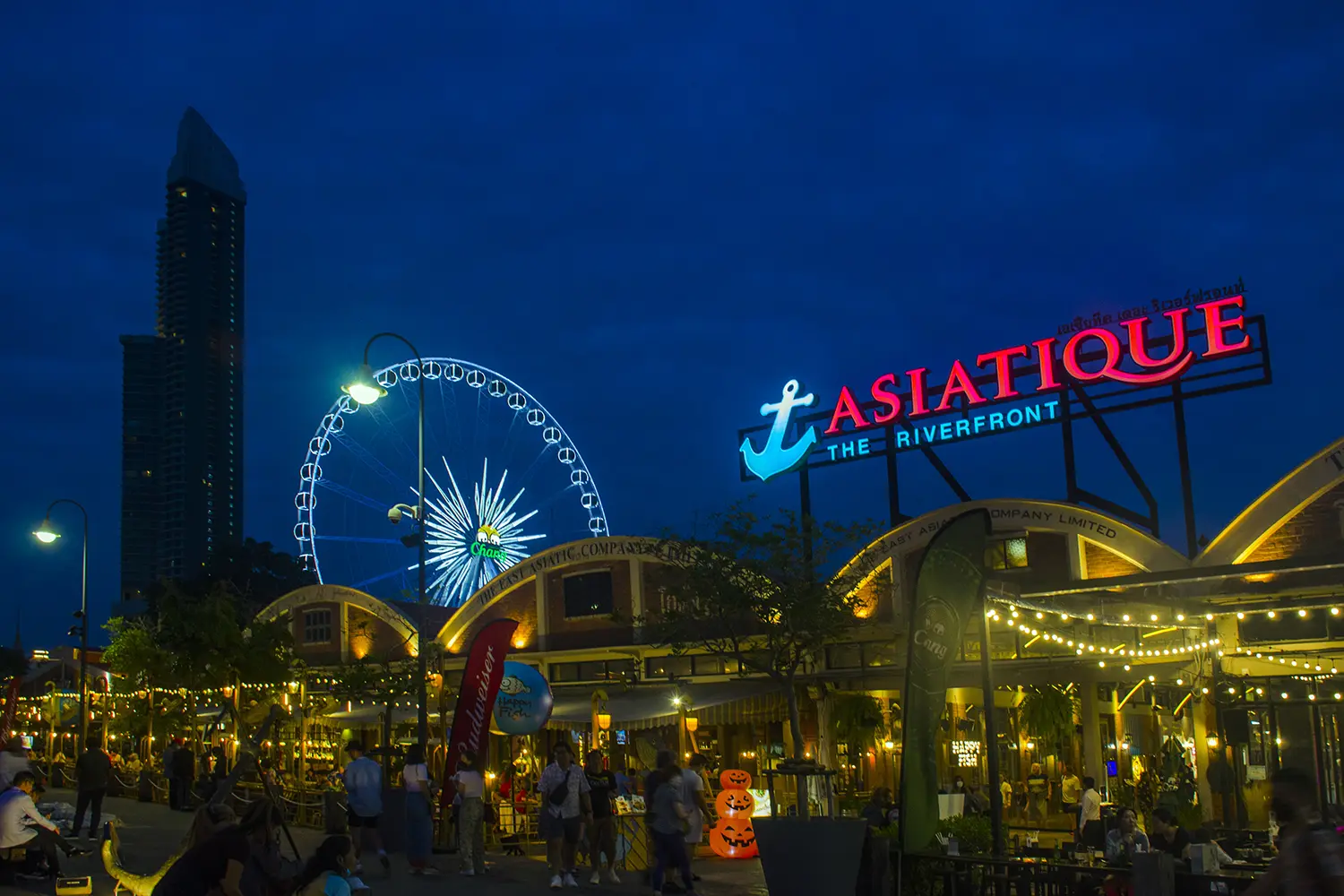
Occupying the historic, restored docks of the East Asiatic Company along the Chao Phraya River, Asiatique functions more as a boutique open-air lifestyle mall than a raw night market. It features structured boardwalks, a massive Ferris wheel, and permanent brick-and-mortar storefronts.
| Category | Details |
|---|---|
| Target Audience | Families, couples, and cruise passengers. |
| Vibe | A clean, breezy riverside atmosphere with a historical maritime theme. |
| Key Attraction | Asiatique Sky Ferris Wheel, riverside restaurants, shopping, and evening entertainment. |
| Pricing Tier | High – Premium tourist pricing. |
- Why It Matters: It provides a clean environment with scenic river views, making it an easy option for families or travelers who want to avoid narrow, crowded pathways. However, experienced travelers skip Asiatique if they are looking for cheap street food or an authentic local scene.
- How to Get There: Take the BTS Silom Line to Saphan Taksin Station. Walk down to the central pier and board the dedicated, free Asiatique shuttle boat that runs regularly throughout the evening.
- Hours: Daily, 11:00 – midnight.
- Average Spend: ฿600–฿1,500 per person.
7. The Local Franchise: Indy Market (Dao Khanong & Pinklao)
Talad Indy (ตลาดอินดี้)
The Indy Market brand operates several branches throughout the residential western banks of the river (Thonburi). The Dao Khanong and Pinklao branches are highly popular neighborhood hubs that see very little western tourist foot traffic.
- Why It Matters: These venues are small, tightly packed, and cleanly laid out in rows of uniform stalls. They offer a direct look into everyday neighborhood life in Bangkok, featuring affordable clothing boutiques, local beauty salons, and small pop-up bars built out of shipping pallets.
- What to Eat: Charcoal-grilled seafood platters, sweet and savory Roti, and seasoned pork skewers (Moo Ping) served with warm sticky rice in small plastic bags.
- How to Get There: For the Pinklao branch, take the MRT Blue Line to Bang Yi Khan Station, which places you right outside the market entrance.
- Hours: Daily, 17:00 – midnight.
- Average Spend: ฿200–฿400 per person.
Technical Comparison Matrix
| Market Name | Primary Focus | Best Transit Access | Operational Days | Crowd Profile |
| Srinakarin Train Market | Vintage, Antiques, Bars | MRT Yellow Line (Suan Luang Rama 9) | Thu–Sun | Local subcultures, vintage hunters |
| Jodd Fairs Ratchada | Trendy Food, Lifestyle | MRT Blue Line (Phra Ram 9) | Daily | Tourists, office workers |
| Save One Go (Bangna) | Ultra-budget Street Food | MRT Yellow Line (Si Iam) | Daily | Local families, students |
| Owl Night Market | Late-night Flea, Secondhand | MRT Purple Line (Yaek Nonthaburi 1) | Daily | Bargain hunters, suburban locals |
| Pratunam Night Market | Wholesale Fashion, Textiles | BTS Chit Lom / ARL Ratchaprarop | Daily | Bulk shoppers, fashion retailers |
| Asiatique The Riverfront | Riverside Dining, Souvenirs | BTS Saphan Taksin + Free Shuttle Boat | Daily | Families, tour groups |
| Indy Market Pinklao | Neighborhood Eats, Retail | MRT Blue Line (Bang Yi Khan) | Daily | Thonburi residents, students |
Strategic Street-Level Navigation Advice
Timing Your Arrival
Do not arrive at any night market at 17:00 expecting full energy. While vendors begin setting up their stalls late in the afternoon, a market rarely reaches its stride until the tropical heat breaks. Aim to arrive between 19:30 and 21:00 when all kitchens are running at full capacity and live music sets begin.
Managing Cash and Payments
While upscale venues accept credit cards, the vast majority of food and clothing stalls at local markets operate on cash or local mobile banking transfers (PromptPay via Thai bank accounts).
Keep a supply of ฿20, ฿50, and ฿100 bank notes. Handing a ฿1,000 note to a vendor for a ฿40 skewer drains their small change early in the evening and slows down service.
Navigating the Traffic
Never take a standard wheeled taxi or a tuk-tuk directly through central commercial corridors during peak evening hours (17:30 – 19:30). You will end up sitting in gridlock while the meter runs.
Always use the BTS (Skytrain) or MRT (Subway) lines to reach the station closest to your destination market, then walk or take a short motorcycle taxi ride for the final leg.
Frequently Asked Questions
What is the largest night market currently open in Bangkok?
The Srinakarin Train Night Market (Talad Rot Fai) remains the largest open-air evening market in Bangkok. It spans several acres and features thousands of individual stalls divided into distinct zones for antiques, clothing, food, and open-air entertainment.
Are Bangkok night markets open during rainstorms?
Most major markets remain open during typical tropical downpours, though open-air floor-mat vendors will quickly pack up their goods. Venues with paved walkways and sturdy canvas awnings like Jodd Fairs or Srinakarin continue operating, though foot traffic drops significantly. If caught in a heavy monsoon storm, seek shelter in the covered bar or warehouse zones.
Where can I find genuine vintage clothing and antiques?
Skip the central inner-city markets if you are hunting for authentic vintage goods. Head straight to the warehouse sections of Srinakarin Train Night Market on a Friday or Saturday night, or explore the expansive secondhand fields at the Owl Night Market in Nonthaburi.
Is bargaining expected when buying food at night markets?
No. Food prices at all night markets are fixed and clearly displayed on menus or signs. Attempting to negotiate the price of a meal or street snack is contrary to local etiquette. Bargaining is only appropriate at clothing and souvenir stalls, particularly if you are buying multiple items at once.
Final Thoughts
Navigating Bangkok’s night markets successfully requires matching your specific goals with the right venue’s identity. If you want high-end vintage collectibles and a live local music scene, make the journey out to Srinakarin. If you only want a quick, centrally located dinner after a day of sightseeing, use the subway to visit Jodd Fairs. Choosing locations based on transit accessibility and authentic local footprints ensures you avoid artificial tourist spaces and experience the real rhythm of the city’s evening trade.