

Bangkok Digital Nomad Paradise: The Complete 2026 Guide
Bangkok has long served as the default landing pad for location-independent professionals in Southeast Asia. Today, it is no longer just a cheap stopover for bootstrap entrepreneurs. The city has matured into a premium remote work capital with enterprise-grade infrastructure.
- Why Bangkok Works for Remote Work
- Best Neighborhoods for Digital Nomads
- Asoke & Phrom Phong (The Commercial Core)
- Ari (The Cafe Culture Zone)
- Phra Khanong & On Nut (The Value Corridor)
- Working Remotely: Coworking & Connectivity
- Cost of Living Tiers in Bangkok
- The Lean Nomad ($1,200 – $1,500 / month)
- The Comfortable Remote Worker ($2,000 – $3,000 / month)
- The Executive Nomad ($4,000+ / month)
- Visas & Legalities: The 2026 DTV Update
- Frequently Asked Questions
- Final Thoughts
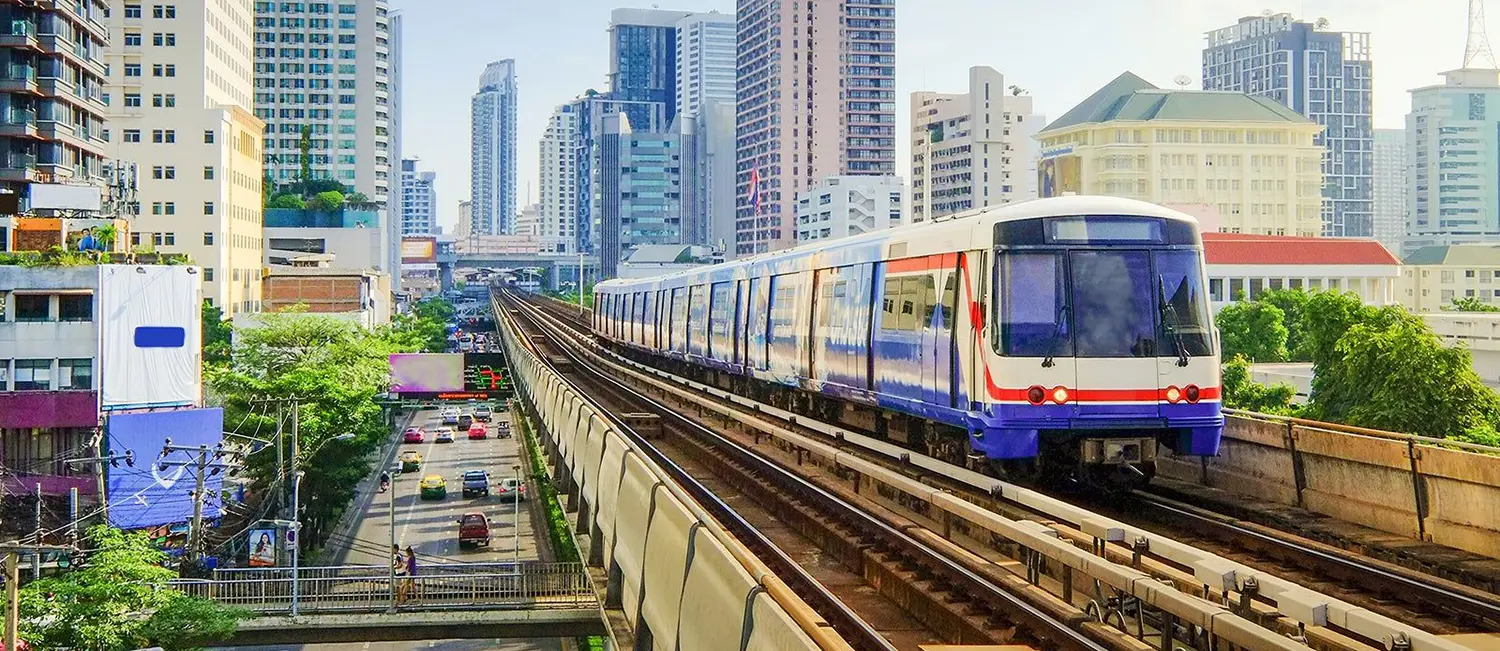
What most first-timers don’t realize is that living here requires strategy. The heat, the scale of the city, and the traffic mean your daily routine lives or dies by your neighborhood choice and proximity to the BTS Skytrain.
This guide breaks down exactly how to set up a sustainable, productive, and legal remote work lifestyle in Bangkok in 2026.
Why Bangkok Works for Remote Work
Bangkok is a top digital nomad hub because it offers world-class internet connectivity, flexible leasing options for high-rise condos, and a relatively low cost of living compared to Western capitals. The city is highly functional for foreigners. English is widely spoken in commercial districts, and food delivery apps like Grab and Foodpanda operate 24/7. You can land at Suvarnabhumi Airport on a Monday and have a fully furnished apartment, a 5G eSIM, and a desk at a premium coworking space by Tuesday afternoon.
The introduction of the Destination Thailand Visa (DTV) has fundamentally changed the landscape. Remote workers no longer have to rely on questionable border runs or expensive elite programs to stay legally for extended periods.
Best Neighborhoods for Digital Nomads
Choosing where to live dictates your entire Bangkok experience. If you rely on taxis during rush hour, you will lose hours of your day. Stick to the mass transit lines (BTS and MRT).
Asoke & Phrom Phong (The Commercial Core)
These adjacent neighborhoods sit on the BTS Sukhumvit line and represent the highest concentration of foreign professionals. You get immediate access to top-tier gyms, international supermarkets, and major coworking spaces.
The downside is the heavy concrete environment and peak-hour pedestrian gridlock. Rent here is at a premium, with standard one-bedroom condos starting around 25,000 THB ($700 USD) per month.
Ari (The Cafe Culture Zone)
Located a few stops north on the BTS Sukhumvit line, Ari feels like a different city. It features tree-lined streets, independent coffee roasters, and a much quieter, residential atmosphere.
It is the preferred base for creative professionals and writers who want to avoid the heavy nightlife zones. Condos here are slightly older but offer more square footage for the price.
Phra Khanong & On Nut (The Value Corridor)
If you move slightly further east down the BTS line, rent prices drop by 30%. Phra Khanong and On Nut offer an excellent balance of local street food culture and modern conveniences.
You will find plenty of affordable co-living spaces and younger remote workers here. A modern studio near the On Nut BTS can easily be secured for 15,000 THB ($420 USD) per month.
Working Remotely: Coworking & Connectivity
Working from your condo or a coffee shop is fine for a few days, but long-term productivity usually requires a dedicated workspace. Bangkok’s coworking scene is highly competitive.
Top Coworking Spaces
- The Great Room (Gaysorn Tower): Located near BTS Chit Lom. This is a high-end, hotel-like workspace with panoramic views of the city. It caters heavily to funded founders and executive nomads.
- The Urban Office (Metropolis Building): Situated near BTS Phrom Phong. It offers excellent ergonomic chairs, soundproof phone booths, and a very corporate, quiet environment ideal for deep work.
- WorkWize (Siam Square): A more casual, centrally located option right at the main BTS interchange. It is popular with younger freelancers and features a highly social atmosphere.
- KO Kreate Space (Pradipat): A great option if you choose to live near Ari or Saphan Khwai. It is spacious, practical, and heavily utilized by local Thai tech workers.
Internet & SIM/eSIM Options
Thailand’s internet infrastructure is exceptional. Fiber optic connections (1 Gbps) are standard in almost all modern condo buildings.
For mobile data, pick up a tourist eSIM at the airport from AIS or TrueMove H to get online immediately. Once you have a long-term lease, visit a mall to convert to a post-paid monthly plan. A high-speed unlimited 5G data plan costs roughly 800 to 1,200 THB ($22 – $35 USD) per month.
Cost of Living Tiers in Bangkok
Your monthly budget in Bangkok scales directly with how much you want to replicate a Western lifestyle. Eating local food keeps costs low; drinking imported wine and eating imported cheese drives them up fast.
The Lean Nomad ($1,200 – $1,500 / month)
- Housing: Studio condo in On Nut or farther out (12,000 THB).
- Food: Mostly street food, local food courts, and cooking at home.
- Workspace: Working from cafes or a basic hot-desk membership.
- Transport: Exclusively BTS/MRT and motorbike taxis.
The Comfortable Remote Worker ($2,000 – $3,000 / month)
- Housing: Modern 1-bedroom in Phrom Phong or Thong Lo (25,000+ THB).
- Food: Mix of mid-range international restaurants, Grab delivery, and occasional local meals.
- Workspace: Dedicated desk at a premium coworking space like The Urban Office.
- Lifestyle: Regular weekend trips, gym membership, and frequent socializing.
The Executive Nomad ($4,000+ / month)
- Housing: Luxury high-rise with a view in Asoke or Sathorn (50,000+ THB).
- Food: High-end dining, imported groceries from Villa Market.
- Workspace: Private office within a premium coworking tier.
- Transport: Private Grab SUVs.
Visas & Legalities: The 2026 DTV Update
Thailand has historically been a legal gray area for digital nomads. In the past, remote workers relied on back-to-back tourist visas or expensive education visas. As of late 2024, and firmly established by 2026, the Thai government created a direct solution.
The Destination Thailand Visa (DTV)
The Destination Thailand Visa (DTV) is a 5-year multiple-entry visa designed specifically for remote workers, freelancers, and individuals participating in Thai cultural activities.
Key details for 2026 applicants:
- Duration: Valid for 5 years. Each entry allows a stay of up to 180 days.
- Extensions: You can extend your stay once per entry for another 180 days at a local immigration office (fee: 1,900 THB). This allows nearly a full year of continuous stay.
- Financial Requirement: You must show proof of at least 500,000 THB (approx. $15,000 USD) in a bank account.
- Work Rules: You are legally allowed to work remotely for foreign employers or foreign clients. You are strictly prohibited from working for a Thai company or taking local clients without a standard work permit.
2026 DTV Rule Clarifications
Thai embassies have tightened the requirements recently. You can no longer use enrollment in a basic Thai language school to qualify under the “Soft Power” category.
If you apply via the Soft Power route (e.g., Muay Thai or cooking classes), embassies now generally require the training program to last a minimum of six months. For pure remote workers (“Workcation” category), you must provide solid proof of a remote employment contract or a strong freelance portfolio with active invoices.
Disclaimer: Immigration rules in Thailand change frequently. The information provided here is for informational purposes only and does not constitute legal advice. Always check the official Thai E-Visa website or consult a qualified immigration lawyer before applying.
Frequently Asked Questions
Is Bangkok safe for digital nomads?
Yes, Bangkok is highly safe for foreigners. Violent crime is extremely rare. The main risks are traffic accidents, particularly if you choose to ride a rented scooter without experience, and minor scams involving tuk-tuks in heavy tourist areas.
Do I need to speak Thai to live in Bangkok?
No. English is widely spoken in central areas, at coworking spaces, and in hospitals. However, learning basic Thai numbers and food vocabulary will drastically improve your daily interactions and help you order street food efficiently.
Can I drink the tap water in Bangkok?
No. You should not drink the tap water. You must buy bottled water, use a reverse-osmosis filtration machine located on the street, or install a high-quality water filter in your condo.
What is the best time of year to base myself in Bangkok?
November through February offers the most comfortable weather, with lower humidity and cooler evenings. March through May is intensely hot, and the rainy season (roughly June to October) brings heavy, localized flooding that can disrupt daily commutes.
Can I open a bank account in Thailand on a tourist visa?
It is notoriously difficult. Most major Thai banks require a long-term visa (like a Non-Immigrant B or the DTV) and a certificate of residency. If you are on a short stay, you are better off using travel cards with no foreign transaction fees, such as Wise or Revolut.
Final Thoughts
Bangkok commands respect from remote workers because it simply delivers on its promises. The infrastructure works, the cost of living remains controllable, and the new visa regulations finally offer legal peace of mind. It requires a brief adjustment period to navigate the heat and scale, but the payoff is a highly functional, comfortable base of operations in Asia.