

Thailand Temple Stay Guide: Live Like a Monk for a Day
For many travelers, Thailand’s golden spires and orange-robed monks are the backdrop of a vacation. However, for those seeking a deeper connection to the “Land of Smiles,” the experience of a temple stay offers a rare window into the spiritual engine of Thai culture.
- The Philosophy of the Thai Temple Stay
- Top Destinations for a Temple Stay
- Wat Pa Tam Wua, Mae Hong Son
- Wat Umong, Chiang Mai
- Wat Mahathat (Section 5), Bangkok
- A Typical Daily Schedule
- Essential Rules and Etiquette
- Dress Code
- Interaction with Monks
- Practical Preparation
- What to Pack
- The Cost
- Frequently Asked Questions
- Do I need to be Buddhist to stay at a temple?
- Is there an age limit for temple stays?
- Can I leave the temple during my stay?
- Will there be English instruction?
- How do I handle the “no food after noon” rule?
- Final Thoughts
Living like a monk—even for a short duration—is not about a scenic retreat; it is an exercise in mindfulness, discipline, and communal living. It is a journey into the “Middle Way,” where the goal is to strip away the noise of modern life to find a quiet, centered clarity.
The Philosophy of the Thai Temple Stay
In Thailand, the temple (wat) is the heart of the community. It is a school, a town hall, and a sanctuary. When you enter a temple for a stay, you are not a guest in a hotel; you are a participant in a centuries-old tradition.
The experience is centered around Vipassana (insight) meditation. The purpose is to observe the mind and body as they truly are. By following the daily routine of a monk, you adopt a lifestyle designed to minimize distractions. This means limited speech, no entertainment, and a focus on the present moment.
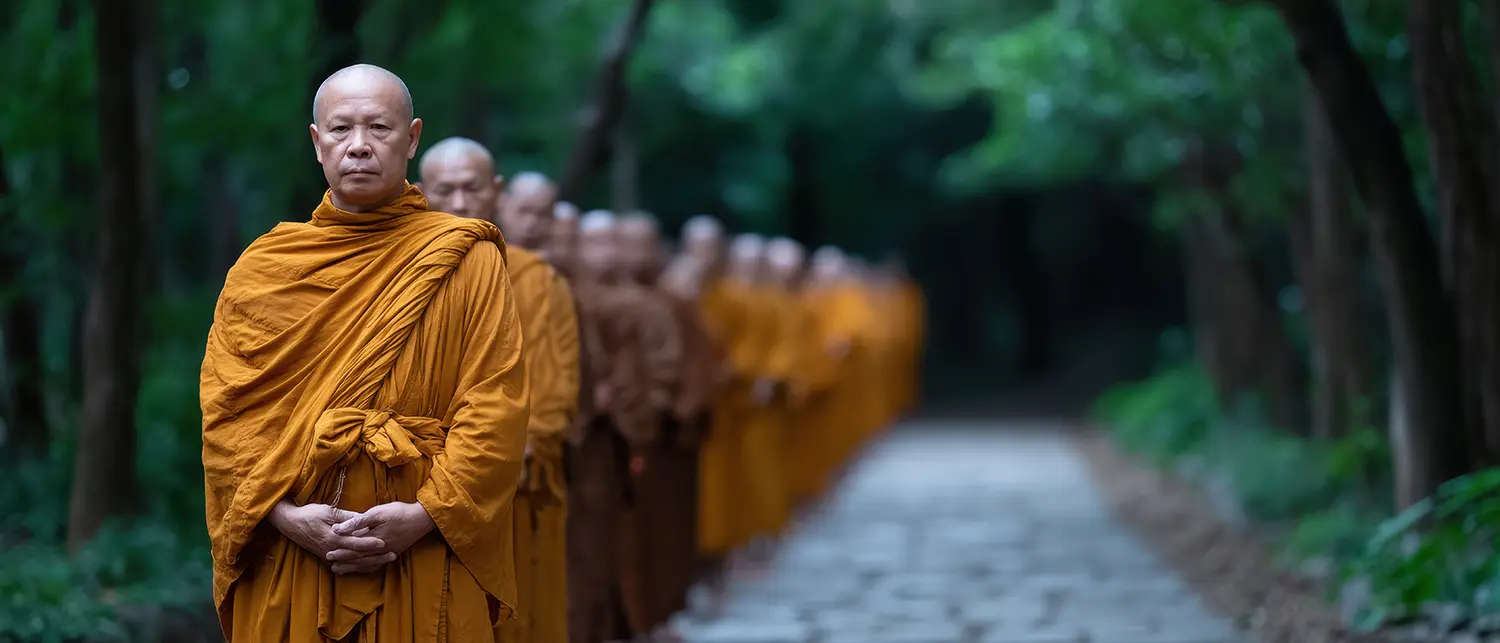
Top Destinations for a Temple Stay
Thailand offers several locations that cater specifically to English speakers, ranging from forest monasteries in the north to urban centers in Bangkok.
Wat Pa Tam Wua, Mae Hong Son
Located in a stunning valley between Pai and Mae Hong Son, this forest monastery is perhaps the most beginner-friendly and scenic option. The focus here is on “natural meditation.”
- Environment: Lush gardens, limestone cliffs, and a peaceful pond.
- Structure: Very welcoming to foreigners; meditation is taught in English and Thai.
- Cost: Strictly donation-based.
Wat Umong, Chiang Mai
Known as the “Tunnel Temple,” Wat Umong is set in a forested area at the foot of Doi Suthep. It offers a more historic and atmospheric experience.
- Environment: Ancient brick tunnels and “talking trees” with proverbs in English.
- Structure: Offers 3 to 15-day retreats with English-speaking monks.
- Focus: A balance of walking and sitting meditation in a secluded forest setting.
Wat Mahathat (Section 5), Bangkok
For those who cannot leave the capital, Wat Mahathat provides a rigorous Vipassana center in the heart of Old City (Rattanakosin).
- Environment: Urban but surprisingly quiet once inside the meditation halls.
- Structure: Daily classes for English speakers. It is one of the oldest centers for Buddhist study in Thailand.
- Focus: Intensive insight meditation without the travel time to the mountains.
A Typical Daily Schedule
A temple stay is governed by the clock. While every monastery differs slightly, the rhythm of the day is remarkably consistent across the country.
| Time | Activity | Significance |
| 04:00 AM | Wake Up | The day starts before dawn to capture the mind’s natural morning stillness. |
| 05:00 AM | Chanting & Meditation | Rhythmic Pali chants help focus the mind before the first sitting session. |
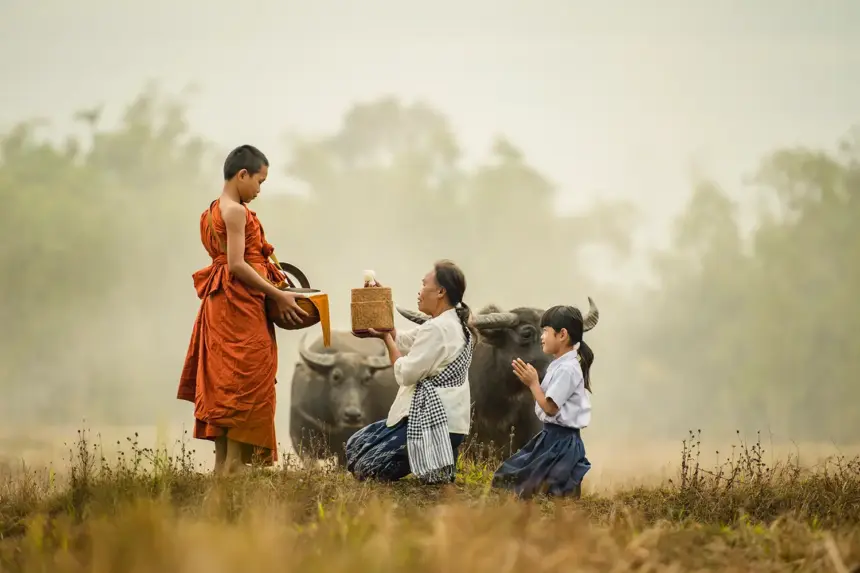
| 06:30 AM | Alms Giving (Tak Bat) | Lay practitioners may help monks prepare for or receive food from the community. |
| 07:30 AM | Breakfast | Usually the first of only two meals for the day. |
| 09:00 AM | Dhamma Talk | A monk provides a lesson on Buddhist philosophy and practical living. |
| 11:00 AM | Lunch | This is the final meal of the day. No solid food is consumed after noon. |
| 01:00 PM | Walking Meditation | Moving slowly and mindfully, observing the sensation of each step. |
| 04:00 PM | Temple Cleaning | “Mindful Work.” Raking leaves or sweeping paths to serve the community. |
| 06:00 PM | Evening Chanting | A concluding group session to reflect on the day’s practice. |
| 09:00 PM | Bedtime | Early rest to prepare for the 4:00 AM wake-up call. |
Essential Rules and Etiquette
When staying at a temple, you are expected to follow the Eight Precepts. These are moral guidelines that go beyond the basic five followed by most lay Buddhists.
- Refrain from harming living beings: This includes insects.
- Refrain from taking what is not given: Respect all temple property.
- Refrain from unchaste behavior: Total celibacy is required during the stay.
- Refrain from false speech: Many stays encourage “Noble Silence.”
- Refrain from intoxicants: No alcohol, cigarettes, or drugs.
- Refrain from eating after noon: You may have tea, juice, or coffee.
- Refrain from entertainment and beautification: No music, dancing, or perfumes.
- Refrain from sleeping on high, luxurious beds: You will likely sleep on a thin mat.
Dress Code
You will be required to wear all-white clothing. This symbolizes purity and equality among practitioners. Most temples have these clothes available for rent or purchase for a small fee (around 200–500 THB).
Interaction with Monks
- Women: Must never touch a monk or his robes. When giving an offering, place it on a cloth provided by the monk.
- The “Wai”: Greet monks with a deep wai (palms together, thumbs touching the bridge of the nose) and a slight bow.
- Feet: Never point your feet toward a Buddha image or a monk. When sitting, tuck your feet behind you.
Practical Preparation
What to Pack
- Loose White Clothing: If you don’t buy them at the temple, ensure yours are opaque and cover shoulders and knees.
- Toiletries: Most temples provide a room/mat but not personal items.
- Insect Repellent: Essential for forest monasteries.
- Flashlight: Useful for early morning walks or navigating tunnels.
- Slip-on Shoes: You will be removing your shoes constantly.
The Cost
Most legitimate temple stays in Thailand operate on a donation basis (Dana). While there is no “bill,” it is customary to donate enough to cover the cost of your food and electricity. For a single night, 300–500 THB is a respectful baseline, though many give more to support the temple’s mission.
Frequently Asked Questions
Do I need to be Buddhist to stay at a temple?
No. Temples welcome people of all faiths and backgrounds. The focus is on the universal practice of mindfulness and meditation rather than religious conversion.
Is there an age limit for temple stays?
Generally, no. However, participants must be old enough to maintain silence and follow the schedule. Some monasteries have specific “Wake Up” retreats for young adults (18–40), while others like Wat Pa Tam Wua accept all ages.
Can I leave the temple during my stay?
Usually, no. Once you check in for a retreat, you are expected to stay on the grounds until the end. This prevents “leaking” the mindfulness you are building through outside distractions.
Will there be English instruction?
In major centers like Wat Pa Tam Wua, Wat Umong, and Wat Mahathat, English-speaking monks or lay teachers are available. Always check the temple’s specific schedule for “Monk Chats” or English meditation classes.
How do I handle the “no food after noon” rule?
It is easier than it sounds. Because the daily routine is low-energy and focused on meditation, your body requires less fuel. Most temples allow “liquid tonics” like tea or cocoa in the evening to keep energy levels stable.
Final Thoughts
A Thailand temple stay is a challenge to the ego and a gift to the mind. By stepping out of the role of a tourist and into the shoes of a practitioner, you gain a perspective on Thai culture that no museum can provide. It is a rare opportunity to trade the noise of the world for the silence of the self, returning to your travels with a newfound sense of presence.