

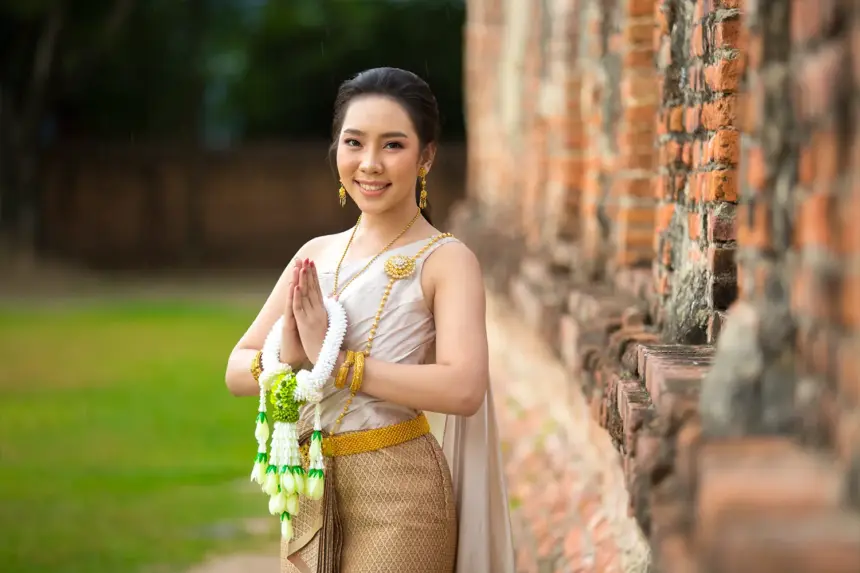
The Land of Smiles: Decoding Thailand’s Most Famous Nickname
Every traveler knows the moniker “The Land of Smiles,” but few understand that this title is the result of a fascinating intersection between 14th-century cultural roots and a brilliant 1960s marketing campaign. In Thailand, a smile is rarely just a sign of happiness; it is a social lubricant, a shield, and a linguistic tool used to navigate one of the world’s most complex etiquette systems.
- The PR Origins: From Siam to a Global Brand
- The Cultural “Why”: Buddhism and Social Harmony
- The 13 Types of Thai Smiles: A Social Toolkit (Summary)
- 1. The Positive & Sincere Smiles
- 2. The Social & Conflict-Management Smiles
- 3. The Defensive & Strategic Smiles
- 4. The Masking Smiles
- The “Face” Mechanic
- Frequently Asked Questions
The PR Origins: From Siam to a Global Brand
While the term “Land of Smiles” feels timeless, its modern ubiquity was a calculated move. In the 1960s, under the leadership of Prime Minister Sarit Thanarat, Thailand launched its first major tourism push. The government sought a way to differentiate the Kingdom from its neighbors during a period of regional instability.
They leaned into the “Siamese Smile”—a term coined decades earlier by visitors who noticed that Thais responded to the language barrier with a grin. By formalizing this into a national brand, the Tourism Authority of Thailand (TAT) created one of the most successful country-branding exercises in history. In practice, this means the nickname is as much a professional standard for the hospitality industry as it is a cultural trait.
The Cultural “Why”: Buddhism and Social Harmony
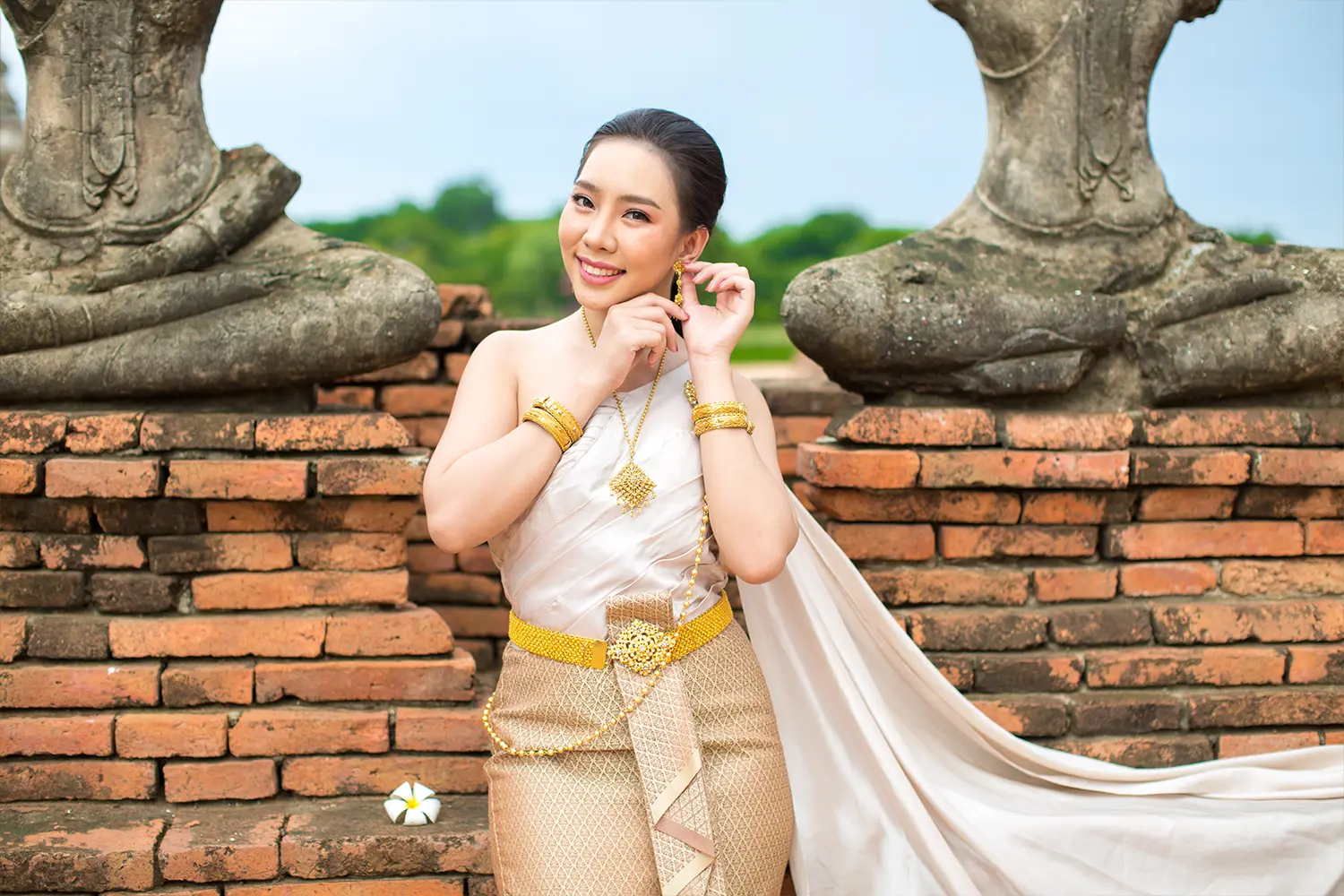
Beyond the brochures, the Thai smile (Yim) is deeply rooted in Theravada Buddhism. The concept of Metta (loving-kindness) encourages a gentle, non-confrontational approach to all living beings.
In a society that prioritizes Jai Yen (a “cool heart”), showing extreme emotions like anger or frustration is viewed as a sign of spiritual immaturity and causes everyone involved to “lose face.” To prevent this, Thais utilize the smile as a buffer. If you see a Thai person smile after a minor car accident or a spilled drink, they aren’t laughing at the misfortune—they are using the smile to signal that the harmony of the moment is more important than the conflict.
The 13 Types of Thai Smiles: A Social Toolkit (Summary)
In Thailand, the smile (Yim) is a sophisticated non-verbal language. Understanding these 13 variations allows you to navigate the nuances of “Face,” social hierarchy, and emotional regulation.
1. The Positive & Sincere Smiles
- Yim Thak Thaai: The “Greeting Smile.” A polite, convenient smile used for strangers or acquaintances you won’t be having a long conversation with.
- Yim Cheun Chom: The “Admiration Smile.” A beautiful, controlled expression used to say, “I am proud of you” or “I admire your achievement.”
- Yim Thang Nam Taa: The “Extreme Happiness” smile. Used when someone is so happy they are crying, or conversely, used to mask deep sadness with a brave face.
2. The Social & Conflict-Management Smiles
- Fuen Yim: The “Stiff/Forced Smile.” Used when a joke isn’t funny but politeness demands a reaction. It says, “I should laugh, so I will.”
- Yim Thak Thaan: The “Disagreeing Smile.” A subtle signal that says, “I don’t agree with your idea, but I’ll go along with it to keep the peace.”
- Yim Haeng: The “Dry/Nervous Smile.” Often used in awkward financial or social situations (e.g., “I know I owe you money, but I don’t have it yet”).
- Yim Yae-Yae: The “Spilt Milk” smile. Used when a situation is bad but unchangeable. It conveys, “There’s no point in crying over this.”
3. The Defensive & Strategic Smiles
- Yim Mee Lessanai: The “Mischievous/Evil Smile.” A devious grin that suggests hidden intentions or a “wicked” thought.
- Yim Yaw: The “Teasing/I-Told-You-So” smile. A lighthearted way to mock or tease someone without being overly harsh or confrontational.
- Yim Cheuad-Cheuan: The “Winner’s Smile.” A triumphant, slightly gloating smile directed at a losing competitor.
- Yim Soo: The “Struggle Smile.” An encouraging smile used during impossible tasks or hardships. It means, “I will keep going no matter what.”
4. The Masking Smiles
- Yim Sao: The “Sad Smile.” A smile that clearly indicates the person is unhappy or grieving, yet they maintain a social “mask.”
- Yim Mai Ork: The “Trying-to-Smile-but-Can’t” smile. Used during moments of intense physical or emotional pain where the effort to stay “cool” (Jai Yen) is failing.
The “Face” Mechanic
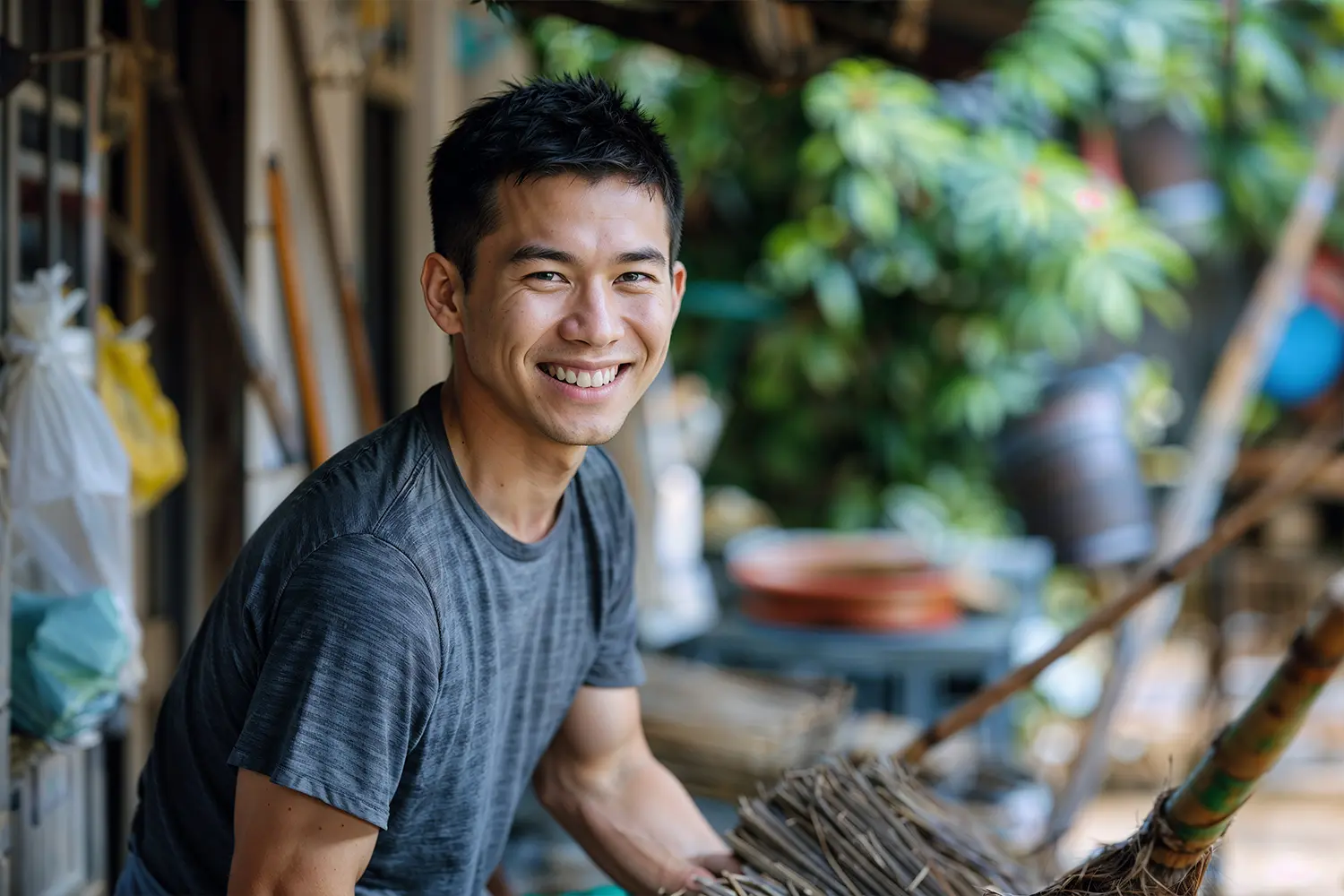
In the West, we are taught to be “authentic” and show our true feelings. In Thailand, authenticity is secondary to Kwamyu-rot (social survival) and the preservation of “Face.” The smile allows a Thai person to disagree or deliver bad news without being “impolite.”
For first-time visitors, this can be confusing. You may receive a smile while being told your train is cancelled. From a Thai perspective, they are trying to make the bad news as pleasant as possible for you. From a Western perspective, it can feel dismissive. Understanding this cultural gap is the first step toward true cultural literacy in the Kingdom.
Frequently Asked Questions
1. Is “The Land of Smiles” just a marketing slogan?
It is both. While the nickname was heavily promoted by the Thai government in the 1960s to boost tourism, it is based on the genuine cultural practice of using smiles to maintain social harmony. The term reflects a real-life behavior that has existed for centuries.
2. Why do Thai people smile when they are in trouble or embarrassed?
This is a “face-saving” mechanism. By smiling during an awkward or difficult situation, a Thai person is attempting to diffuse tension and prevent the other person from feeling uncomfortable or angry. It is a way of saying, “Let’s move past this moment gracefully.”
3. Does a Thai smile always mean the person is happy?
No. In Thailand, a smile can communicate a wide range of emotions, including sadness, disagreement, or shyness. There are over 13 categorized types of smiles, many of which are used to mask negative feelings to keep the social environment “cool” and peaceful.
4. How should I respond if a Thai person smiles at me in a tense situation?
The best response is to remain calm and return a polite, neutral smile. Raising your voice or showing visible anger will cause the Thai person to “lose face,” which usually results in them becoming less helpful or shutting down the interaction entirely.
5. Is the “Land of Smiles” title still relevant in big cities like Bangkok?
Yes, though it may feel different. In the fast-paced environment of Bangkok, smiles might be more “transactional” or “polite” (Yim Thak Thaai) compared to the more spontaneous and lingering smiles found in rural provinces where life moves at a slower pace.
6. Is it true that Thais have a smile for when they disagree with you?
Yes, this is known as Yim Thak Thaan. It indicates that the person disagrees with your logic or request but will go along with it (or at least acknowledge it) to avoid a direct argument. It is a subtle way of maintaining peace while holding a different opinion.
7. Why do I see Buddha statues with a slight smile?
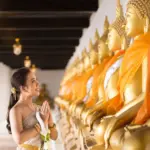
The “Sukhothai smile” seen on many Thai Buddha images represents inner peace, enlightenment, and detachment from worldly suffering. This religious iconography has heavily influenced the Thai ideal of maintaining a serene and smiling demeanor in daily life.
Final Thoughts
Thailand‘s identity as the Land of Smiles is a sophisticated blend of religious values and strategic branding. For the traveler, the smile is not a sign of simplicity, but a sign of a highly evolved social etiquette designed to minimize friction. By learning to read these smiles, you gain a deeper “passport” into the heart of Thai culture than any guidebook can provide.