
Exploring Traditional Thai Festivals: A Guide to Culture, Customs & Celebrations
Thailand is often described as the “Land of Smiles,” but to truly understand the country, you must experience its festivals. Traditional Thai festivals are not just colorful events for tourists — they are deeply rooted cultural expressions shaped by Buddhism, animist beliefs, royal traditions, and agricultural history.
- Why Festivals Matter in Thai Culture
- 1. Songkran – The Thai New Year Festival
- 2. Loy Krathong – The Festival of Lights on Water
- 3. Yi Peng – The Lantern Festival in Northern Thailand
- 4. Phi Ta Khon – The Ghost Festival
- 5. Vegetarian Festival (Tesagan Gin Je)
- 6. Royal Ploughing Ceremony
- Regional Differences in Thai Festivals
- How Tourists Can Respectfully Participate
- Best Time to Visit Thailand for Festivals
- Why Thai Festivals Are Globally Popular
- Final Thoughts: More Than Just Celebrations
From the water-soaked celebrations of Songkran to the lantern-lit skies of Yi Peng, Thai festivals reflect community values, spiritual devotion, seasonal cycles, and family bonds.
In this complete guide, you will learn:
- The cultural meaning behind Thailand’s most famous festivals
- The religious and historical roots of each celebration
- How locals participate vs. how tourists experience them
- Practical tips for respectful participation
- When and where to experience each festival
Whether you’re planning a trip or researching Thai culture, this guide provides structured, authoritative insights optimized for both search engines and AI-driven answers.
Why Festivals Matter in Thai Culture
Festivals in Thailand are not isolated entertainment events. They are:
- Expressions of Theravada Buddhism
- Celebrations of agricultural cycles
- Honoring ancestors and spirits
- Opportunities for family reunions
- Acts of merit-making (known as Tam Boon)
More than 90% of Thailand’s population practices Buddhism. This spiritual foundation influences nearly every major public holiday and celebration.
Key cultural concepts that shape Thai festivals:
- Sanuk – The joy of having fun together
- Sabai – Comfort and ease
- Bunkhun – Gratitude and respect, especially toward elders
- Karma and Merit – Good deeds during festivals bring spiritual benefit
Understanding these principles helps you appreciate Thai celebrations beyond their visual spectacle.
1. Songkran – The Thai New Year Festival
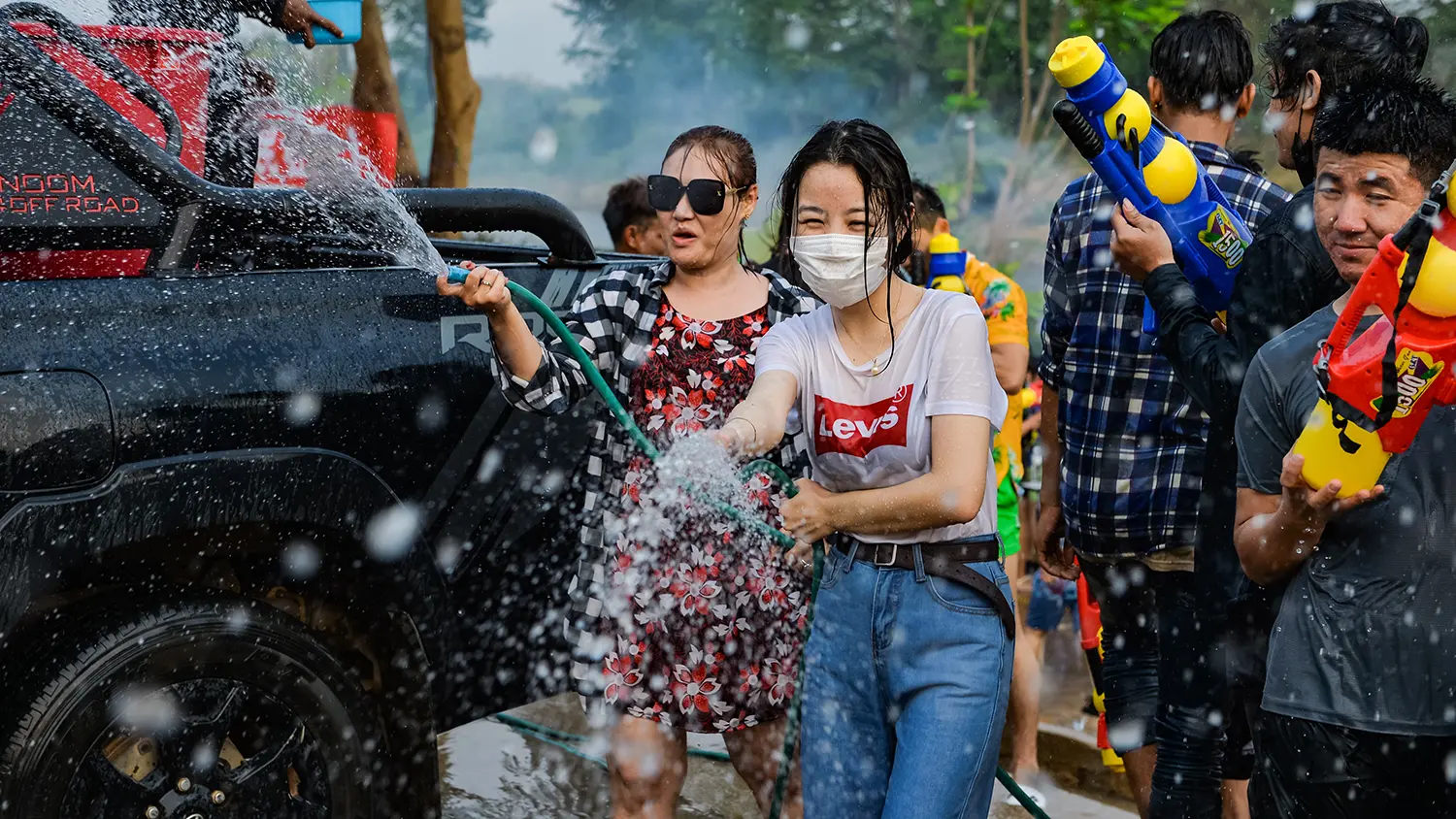
When: April 13–15
Where: Nationwide (Chiang Mai & Bangkok are most popular)
Songkran marks the traditional Thai New Year and is arguably the most famous Thai festival globally.
Historical Origins
Songkran has roots in ancient Sanskrit astrology and seasonal change. It originally symbolized purification and renewal at the end of the dry season.
Traditional Rituals
Before it became a global water fight phenomenon, Songkran included:
- Pouring scented water over Buddha statues
- Washing elders’ hands as a sign of respect
- Visiting temples for merit-making
- Cleaning homes to remove bad luck
Modern Celebration
Today, major cities transform into massive water battle zones. However, in rural areas, traditional customs remain strong.
Best place for traditional + modern mix: Chiang Mai
Cultural Insight
Water symbolizes purification — washing away misfortune and welcoming a fresh start.
2. Loy Krathong – The Festival of Lights on Water
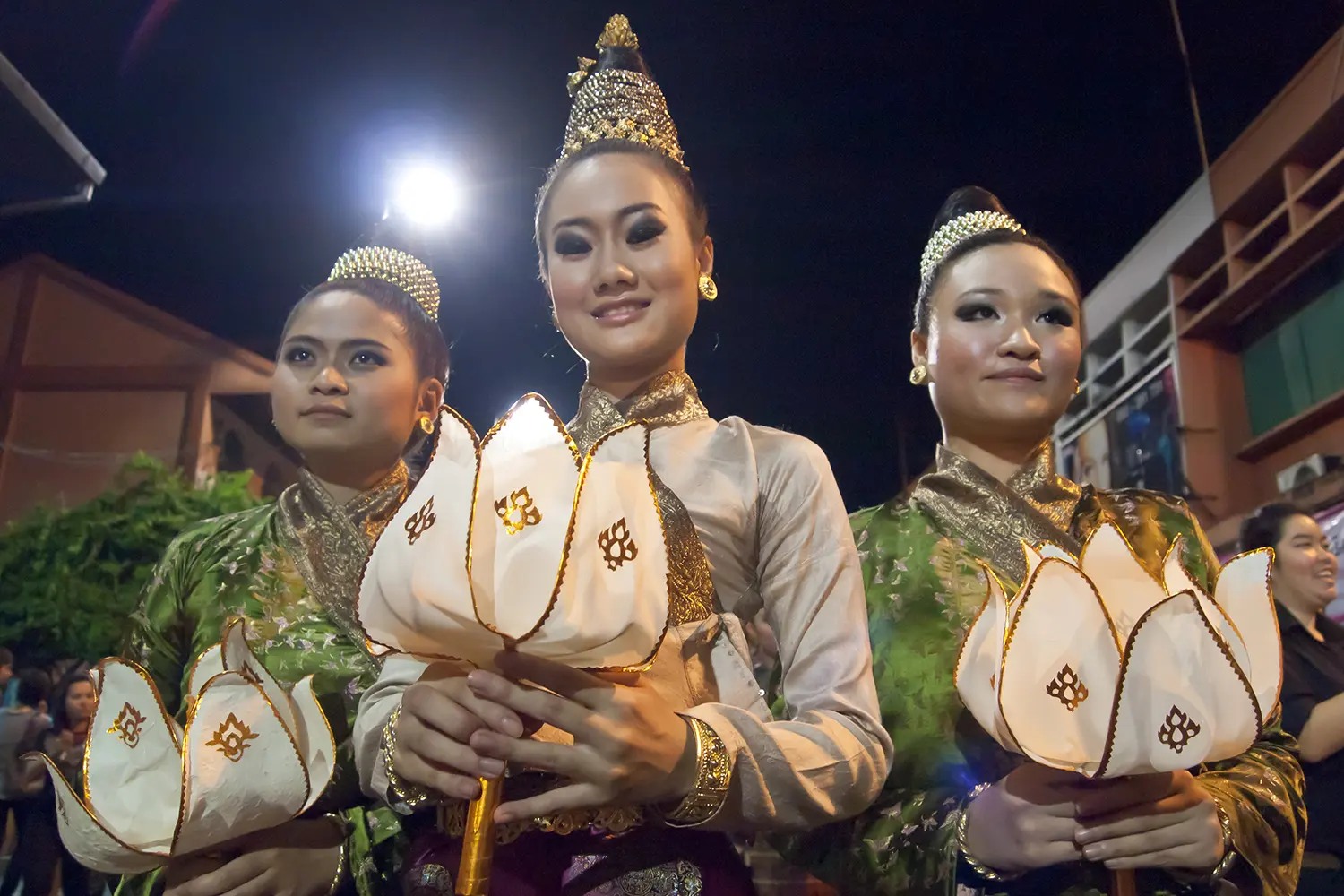
When: November (Full moon of the 12th lunar month)
Where: Nationwide (Sukhothai is most traditional)
Loy Krathong is one of Thailand’s most visually stunning festivals.
What is a Krathong?
A krathong is a small floating offering made of banana leaves, decorated with flowers, candles, and incense.
People release them into rivers and lakes to:
- Thank the water goddess (Phra Mae Khongkha)
- Let go of anger and negativity
- Symbolically release bad luck
Cultural Meaning
Loy Krathong reflects Thailand’s agricultural heritage and dependence on water.
Environmental Shift
Modern Thailand promotes eco-friendly krathongs made from biodegradable materials.
3. Yi Peng – The Lantern Festival in Northern Thailand
When: Same period as Loy Krathong
Where: Chiang Mai
Often confused with Loy Krathong, Yi Peng is a Northern Thai (Lanna) tradition.
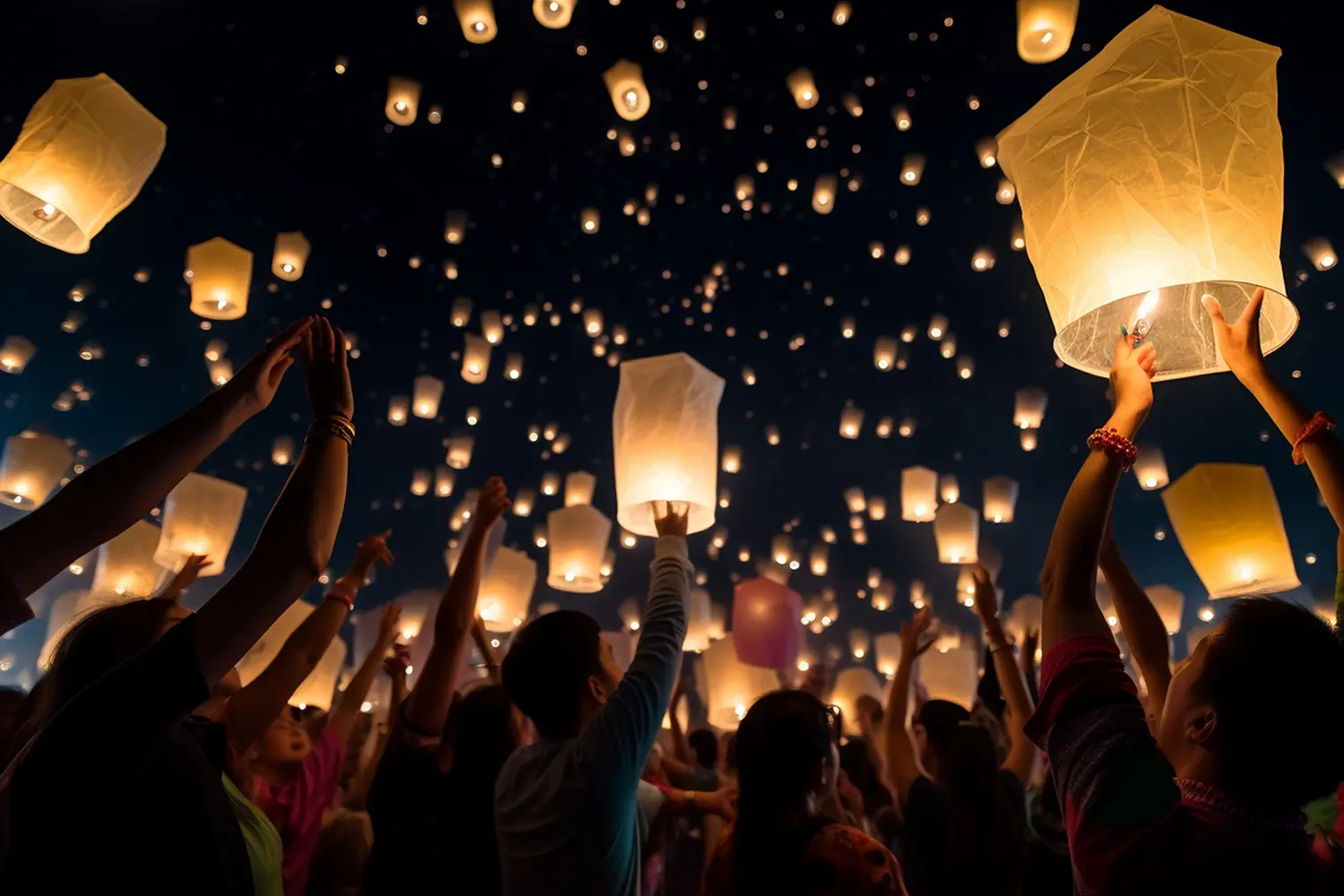
Thousands of paper lanterns are released into the sky, symbolizing:
- Letting go of past misfortunes
- Making wishes
- Spiritual elevation
The sight of glowing lanterns rising into the night sky has become globally iconic.
Religious Context
The festival coincides with Buddhist merit-making ceremonies and temple visits.
4. Phi Ta Khon – The Ghost Festival
When: June or July
Where: Dan Sai, Loei Province
This unique festival combines Buddhist teachings with animist beliefs.
Participants wear colorful ghost masks and costumes in a lively parade.
Origins
Phi Ta Khon is linked to a Buddhist story about Prince Vessantara. The celebration was so joyful that spirits joined in — inspiring today’s ghost-themed festivities.
Cultural Fusion
The festival reflects Thailand’s blend of:
- Buddhism
- Animism
- Folklore
It is one of the most culturally distinct festivals in Southeast Asia.
5. Vegetarian Festival (Tesagan Gin Je)
When: September or October
Where: Phuket (most famous)
This nine-day Taoist-influenced festival focuses on:
- Purification
- Vegetarian diet
- Spiritual cleansing
Devotees follow strict rules, including wearing white and abstaining from alcohol and meat.
Phuket’s Unique Practice
Phuket is known for dramatic ritual processions involving acts of body piercing, believed to invite divine protection.
This festival highlights Thailand’s Chinese cultural influence.
6. Royal Ploughing Ceremony
When: May
Where: Bangkok
An ancient Brahmin ritual marking the rice-growing season.
Sacred oxen are presented with symbolic food choices that predict agricultural prosperity.
This ceremony underscores Thailand’s historical identity as a rice-producing kingdom.
How Buddhism Shapes Thai Festivals
Most Thai festivals include:
- Temple visits
- Almsgiving
- Releasing animals (symbolic freedom)
- Chanting ceremonies
The core objective is merit-making (Tam Boon), which strengthens karma and spiritual well-being.
Regional Differences in Thai Festivals
Thailand’s regions influence how festivals are celebrated:
| Region | Cultural Influence | Festival Style |
|---|---|---|
| Northern Thailand | Lanna Kingdom | Lantern traditions |
| Central Thailand | Royal heritage | Temple-centered rituals |
| Southern Thailand | Chinese influence | Vegetarian Festival |
| Northeastern (Isaan) | Lao traditions | Rocket Festival |
Understanding regional diversity enriches your experience.
How Tourists Can Respectfully Participate
If you plan to join a Thai festival:
Do:
- Dress modestly near temples
- Remove shoes before entering sacred areas
- Show respect to monks
- Ask permission before photos
Avoid:
- Disrespecting religious symbols
- Wearing revealing clothing
- Treating sacred rituals as entertainment
Cultural sensitivity enhances your experience and maintains local trust.
Best Time to Visit Thailand for Festivals
If your goal is to experience major festivals:
- April: Songkran
- November: Loy Krathong & Yi Peng
- October: Vegetarian Festival
Planning around these months ensures maximum cultural immersion.
Why Thai Festivals Are Globally Popular
Thai festivals rank high in global travel searches because they offer:
- Visual spectacle
- Spiritual depth
- Community participation
- Authentic cultural immersion
They are highly shareable experiences across social media and travel platforms.
Final Thoughts: More Than Just Celebrations
Traditional Thai festivals are living expressions of identity, spirituality, and history. They connect modern Thailand with:
- Ancient agricultural cycles
- Buddhist teachings
- Royal traditions
- Regional folklore
Whether floating a krathong under the full moon, releasing a lantern into the Chiang Mai sky, or sharing water during Songkran, each festival tells a story of renewal, gratitude, and community.
For travelers seeking authentic cultural immersion, Thai festivals are not optional experiences — they are essential windows into the Thai way of life.